Aeroponics vs Traditional Potato Farming: Costs, Yields & Benefits
Potatoes are one of the most widely grown food crops in the world. They are grown for daily meals, food supply chains and farm income. From small family farms to large commercial operations, potatoes play a key role in food systems across many regions. Because of this, farmers are always looking for better ways to grow them with stable output and lower risk.
For decades, traditional potato farming has relied on soil, open fields, rainfall and irrigation. This method is familiar and still used by most growers today. At the same time, farming faces pressure from limited water, rising input costs, plant diseases and shrinking land near cities. These issues have pushed interest toward controlled growing systems.
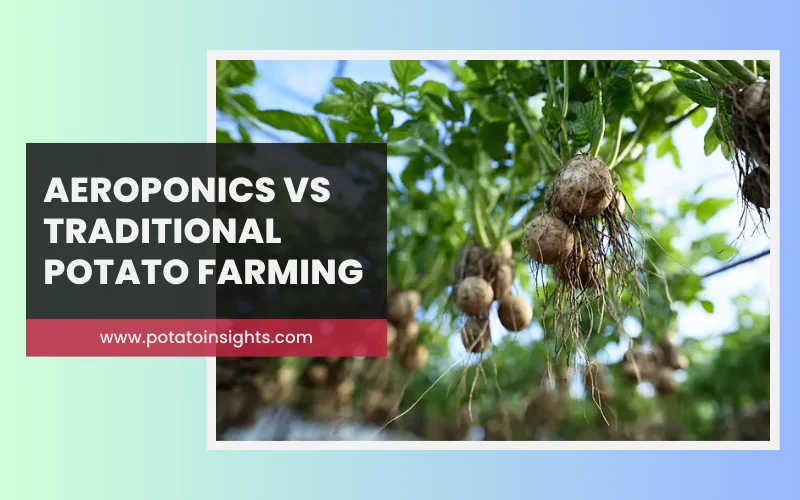
Aeroponic potato farming is one such system. Instead of soil, plants grow with their roots hanging in the air and receiving a fine nutrient spray. This method is often used indoors or in greenhouses. It aims to save water, reduce disease and increase output per plant, especially for seed potato production. This article compares aeroponics and traditional potato farming in simple terms. It looks at costs, yields, water use, space needs and practical benefits.
What Is Traditional Potato Farming?
Traditional potato farming uses soil on farms. Farmers prepare land, add seeds to soil, water with rain or irrigation and apply fertilizer and water. Good land and weather help plants grow. Thoughtful care controls pests and disease.
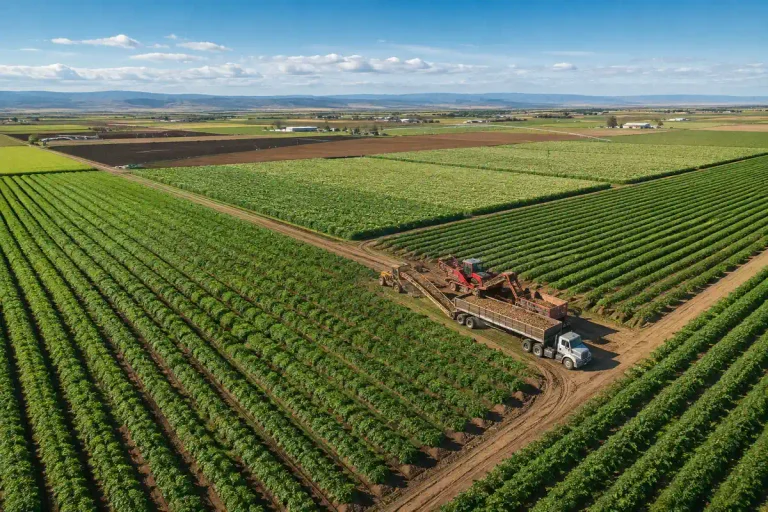
A typical yield for potatoes in open fields can be about 25–30 tonnes per hectare. For example, in India, average potato output was around 24.5 tonnes per hectare in recent years. This number can change by region, soil type and climate.
Costs of Traditional Farming
- Land cost and preparation
- Seed tubers purchase
- Irrigation and water use
- Fertilizers and sprays for pests
- Labour for planting and harvest
Traditional farming uses a lot of water and space. It can have soil disease issues and seed degeneration over time. Many farmers reuse seeds that carry disease, lowering output.
Also read: Top 10 Potato Producing States in India
What Is Aeroponic Potato Farming?
Aeroponic farming grows potatoes without soil. Roots hang in air and get a fine mist of water with nutrients. The system runs in greenhouses or controlled spaces.
Aeroponic setups can cost more to start. Basic small systems may range from roughly ₹2,00,000 to ₹3,00,000 for a small indoor area in India. Larger commercial systems can reach around ₹25,00,000 to ₹30,00,000 or more, depending on size and control systems.
How It Works
- Roots hang and get sprayed
- Nutrient mist feeds plants directly
- Climate often controlled for best growth
- No soil means fewer soil pests
Aeroponic systems may use pumps, tanks and timers to repeat misting at set times. These parts use electricity and need care.
You might also like
-
 Top Potato Exporting Countries Ranked by Value
 -
 The Journey of McDonald’s French Fries From Farm to Fryer
 -
 Top Benefits of Using a Nubbin Grader for Potatoes French Fries
 -
 U.S. Potato Acreage Falls 3% in 2026: What It Means
 -
 Why Idaho Potatoes Are So Famous
 -
 India Frozen Potato Products Market Growth 2026: What’s Driving the Boom
Comparing Yields
Output in Traditional Farming
Traditional field potatoes can yield around 25–30 tonnes per hectare under good conditions.
Output in Aeroponic Farming
Studies show aeroponic methods can give more plants or mini tubers per plant than soil systems in greenhouses.
- Some research reports 2 to 5 times more tubers per plant in aeroponics compared to conventional greenhouse systems.
- Aeroponic setups often produce many mini tubers for seed production — around 30–40 mini tubers per plant or in some cases even more, compared to smaller numbers in soil systems.
This is a major advantage when the goal is seed production, as more healthy seed tubers make scaling easier.
So, even if full field yield numbers differ from mini tuber counts, aeroponic systems often produce more output per plant in controlled setups.
Comparing Costs
Upfront and Running Costs
Traditional:
- Land and water costs can be high.
- Less tech cost, but more labour.
Aeroponics:
- Higher setup cost for lights, pumps and chambers.
- Lower water use and fewer soil pests.
- Electricity and nutrient solution are ongoing costs.
One academic study noted that for seed tuber production, the cost per tuber in aeroponic systems can be about one-fourth of traditional methods because of less disease and faster cycles.
Also read: The Journey of McDonald’s French Fries From Farm to Fryer
Water and Space Use
Aeroponic systems can use 90% less water than traditional soil systems because they recirculate water mist and reduce waste.
Benefits of Each Method
Traditional System
- Familiar and widely used
- Works on open fields
- Good for large bulk production
Aeroponic System
- Higher plant output per space
- Uses less water
- Fewer soil diseases and pests
- Produces consistent seeds for future planting
Practical Use Cases
Best For Field Harvest
Large farms growing millions of tubers for sale and storage often use soil systems. These are suited for wide land areas with good water sources.
Best For Seed Production
Aeroponic systems can make large numbers of healthy seed tubers quickly. This is useful for seed farms or regions with limited land.
Conclusion
Both aeroponic and traditional potato farming have roles. If the goal is large field production, soil farming still works well. For seed tubers and efficient use of water and space, aeroponic systems offer clear benefits. Farmers should match methods to their goals, land and budget.
Also read: India Potato Exports to Indonesia – Market Trends & Price Outlook
Frequently Asked Questions (FAQs):
-
Are aeroponic potatoes the same in taste?
Yes. Once harvested and grown into full plants, yield is similar in taste to soil potatoes.
-
Do aeroponic systems use less water?
Yes. They use far less than soil systems because water mist is recirculated.
-
Can aeroponics work in cities?
Yes. They fit indoor spaces or buildings where soil farming is not possible.
-
Are setup costs high?
Initial costs are higher for aeroponics, but water and seed output can offset costs over time.
-
Do aeroponic potatoes have fewer diseases?
Yes. Soil-borne pests are reduced, so plants stay healthier.
Image credit: Potato Insights
Research sources:
- Potato production in aeroponics research — SciELO article (data on yield differences) Potato production in aeroponics research (turn0search0)
- Aeroponics farming in India cost guide — Sheel Biotech Aeroponics farming in India explained (turn0search3)
- Aeroponics vs conventional mini tuber numbers — Agriculture Journals PDF Comparison of aeroponics and conventional system (turn0search14)
- Cost comparison in potato seed production — ScienceDirect Aeroponic vs traditional cost study (turn0search23)
- Aeroponic seed benefits — Peer Journals review Review on aeroponics seed production (turn0search5)
- Aeroponics sustainable farming overview — MDPI review Systematic review of aeroponics (turn0search29)
Recent Articles

"Get the latest potato industry updates in Google Search. Add Potato Insights as a preferred source for potato markets, processing, trade and industry news."