Why Food Manufacturers Are Picking Potato Starch
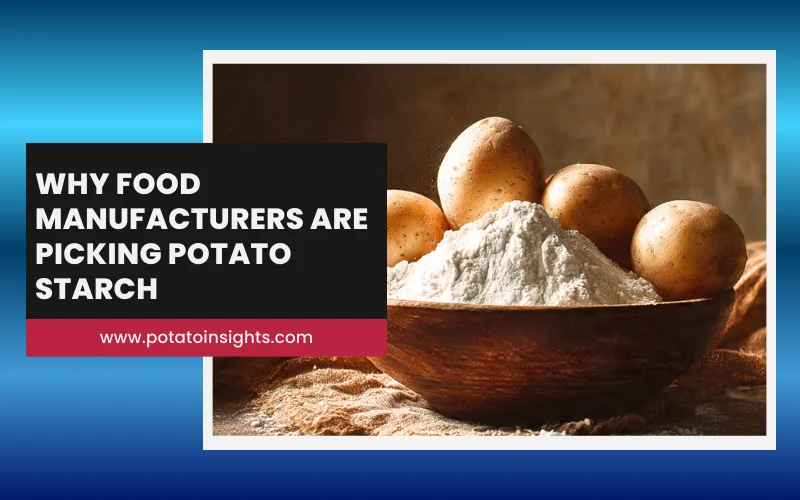
In the past few years, food manufacturers around the world have begun to use more potato starch in sauces, baked foods, snacks, ready meals and many other products. Potato starch is a soft white powder that helps foods thicken, hold moisture and keep a smooth feel. This change is happening across large and small food companies as they look for ingredients that work well, stay simple on labels and meet shopper needs.
At the same time, the global potato starch market is growing at a steady pace. In 2025, the market is valued at US$ 4,739.5 million and by 2032 it is expected to reach US$ 6,391.2 million, with a 4.4% growth rate each year. This rise matches the demand for processed foods, plant-based meals, clean labels and allergy-free choices. These trends make potato starch an important ingredient in the years ahead.
What Potato Starch Is
Potato starch is taken from the inner part of the potato. The potatoes are washed, crushed and filtered until the starch separates from the rest of the plant. Manufacturers then dry the starch into a fine powder that works in both hot and cold cooking.
Food producers use potato starch because it:
- Thickens soups and sauces
- Holds water in baked foods
- Gives a soft feel in gluten-free recipes
- Works well in frozen meals
- Has no flavor that changes the food
These simple traits are why potato starch fits so many food lines.
Why Food Manufacturers Are Changing to Potato Starch
1. Market Growth Shows Clear Demand
The stable rise of the global potato starch market explains why more companies are adopting it. The 4.4% yearly growth expected from 2025 to 2032 shows that the ingredient is gaining space in food, paper, packaging and other industrial areas. From 2019 to 2024, the growth was 3.2%, which means the pace is now stronger.
This growth is driven by:
- Higher use of ready meals
- More gluten-free and plant-based products
- Strong need for simple, clean-label ingredients
- New uses in adhesives, paper and packaging
When the market grows, makers often shift their recipes to match these changes.
Also read: The Truth About Potato Peel Waste Around the World
2. Price and Supply Matter
Food companies plan their recipes based on price, availability and long-term supply. In Europe, potato starch has a strong supply chain due to stable farming in Germany, France and the Netherlands. These countries support leading producers such as Avebe, Roquette and Emsland Group.
You might also like
-
 Top 10 Potato Producing Countries in the World (2026)
 -
 India Frozen Potato Products Market Growth 2026: What’s Driving the Boom
 -
 The Journey of McDonald’s French Fries From Farm to Fryer
 -
 Smart Packaging Trends Changing the Potato Chips and Snacks Market
 -
 How Many Pounds of Potato Chips Are Eaten on Super Bowl Sunday?
 -
 Idaho Potatoes vs Russet Potatoes – What’s the Real Difference?
Europe also produces about 9.2 million tons of starch and starch items each year, which gives buyers more stable access. This makes it easier for food makers to keep costs predictable.
In North America, potato starch demand is rising due to the large ready meal and snack sectors. The U.S. also imports more potato starch each year as manufacturers replace corn starch in certain uses. Canada’s sharp rise in gluten-free foods has also increased its imports.
In Asia Pacific, China, India and nearby countries are expanding their use of potato starch in foods, paper goods, textiles and adhesives. China is the largest exporter in this region, while India’s fast-growing paper and packaging industries drive demand for starch-based binders.
All of this helps keep supply more balanced for global food manufacturers.
3. Clean-Label Needs Are Stronger Than Ever
A growing number of shoppers want food labels they can read without long chemical names. Many people compare products based on how simple the ingredients look.
A 2024 survey showed more than 60% of shoppers prefer simple names like “potato starch” when buying sauces, soups or baked foods. This shift has pushed makers to update their ingredient lists.
Potato starch helps because:
- The name is simple
- It replaces more complex blends
- It removes the need for some additives
- It fits plant-based and vegan diets
As clean labels become more common, potato starch fits into many new recipes.
4. Texture Control in Foods
Potato starch can give foods a smooth, stable and pleasant feel. Its high amylopectin content helps with thickening and gel formation, which improves texture in both hot and cold foods.
Food manufacturers value it because:
- It thickens without turning sticky
- It holds water better than many other starches
- It keeps frozen meals from separating after thawing
- It helps gluten-free bread and cakes stay soft
These traits match well with changing shopper habits, especially as more people buy frozen meals, plant-based foods and allergy-free snacks.
5. Fits Gluten-Free and Plant-Based Trends
Potato starch is free from gluten, soy and nuts, making it useful in allergy-friendly foods. As more people look for gluten-free and plant-based meals, companies need ingredients that work across many recipes without causing issues.
A 2024–2025 industry study showed that more new plant-based items now use potato starch compared to past years. This is because potato starch helps bind ingredients, improve mouthfeel and replace certain proteins or gums.
Also read: The Journey of McDonald’s French Fries From Farm to Fryer
How Potato Starch Is Used in Real Products
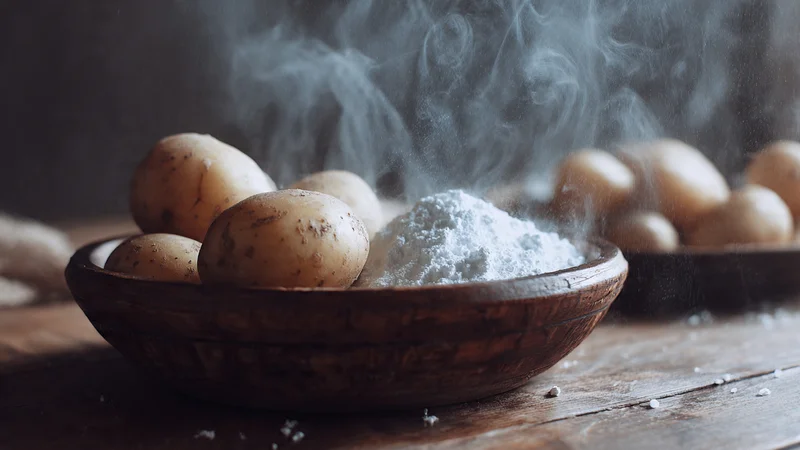
Companies in snacks, baking, ready meals, sauces and even dairy-free products rely on potato starch for texture and moisture control. Here is a simple view of its use:
| Product Type | Why Potato Starch Helps |
| Sauces, soups | Smooth feel and thickening |
| Gluten-free bread | Soft, moist crumb |
| Frozen meals | Better hold after thawing |
| Snacks | Crisp but light texture |
| Dairy-free creams | Thickening without dairy |
How to Evaluate Potato Starch Quality Before Buying
When more food manufacturers start using potato starch, the next question becomes simple: How do you know the starch you buy is good? Even though potato starch looks the same from the outside, the quality can differ a lot. A few checks can help buyers avoid poor batches and keep recipes consistent.
Standard Specifications: Moisture, pH, Whiteness & Viscosity
Good potato starch usually follows a few basic standards. These numbers help buyers understand if the starch will behave as expected in food making.
Moisture:
Most good-quality potato starch has low moisture. Too much moisture can make the starch clump, spoil faster or lose its thickening strength. Low moisture helps the starch stay fresh and flow better during mixing.
pH Level:
Potato starch with a neutral pH works well in most foods. A pH that is too high or too low may affect taste or reduce stability during heating.
Whiteness:
A clean white color often shows good processing. Dull or grayish starch can point to poor washing or leftover impurities. Whiteness also matters for light-colored foods like soups, sauces or desserts.
Viscosity:
This tells you how thick the starch becomes in water. High viscosity is usually preferred for sauces, soups and gluten-free baking. If viscosity is weak, the food may not hold its shape or stay stable after heating.
These four checks help buyers avoid inconsistencies in product quality.
Market Trends by Region
Europe
The potato starch market in Europe grows with support from strong farming, advanced plants and constant output. Manufacturers in food, paper and packaging depend on this supply. Companies also look for starch types that fit cleaner and more natural product lines.
North America
Ready meals, baked snacks and gluten-free foods are increasing in the U.S. and Canada. Manufacturers here use potato starch for better texture and simple labeling. Paper producers also buy more potato starch as they move toward water-based adhesives.
Asia Pacific
China’s large export base and India’s rising paper and food sectors push demand upward. More processed foods and a fast-growing population make this region a major part of future market growth.
Also read: Smart Packaging Trends Changing the Potato Chips and Snacks Market
Conclusion
Potato starch is now a major part of many food recipes. It fits clean-label needs, works well in plant-based and gluten-free foods and gives a smooth and stable texture. Market data shows clear and constant growth in demand through 2032, driven by processed foods, global supply expansion and new uses in packaging and paper.
Food manufacturers will likely continue to add potato starch to their lines as shoppers look for simple ingredient labels and good texture in meals, snacks and baked goods.
Frequently Asked Questions (FAQs):
-
Why are many food companies choosing potato starch?
It works well in many foods and keeps labels simple.
-
Does potato starch change food taste?
No, it stays neutral in most recipes.
-
Is potato starch safe for gluten-free diets?
Yes, it does not contain gluten.
-
Why is potato starch used in frozen meals?
It helps hold water so foods stay stable after thawing.
-
Is potato starch cost-effective?
In many regions, yes. It also has a regular supply chain.
Images credit: Potato Insights
Research sources:
- Persistence Market Research – Potato Starch Market Report
- Markets and Markets – Potato Market Starch
- European Starch Industry Association – Industry Data
- Yasmin Trading – How Potato Starch Is Made
Recent Articles

"Get the latest potato industry updates in Google Search. Add Potato Insights as a preferred source for potato markets, processing, trade and industry news."