Best Climate and Soil Conditions for Potato Farming
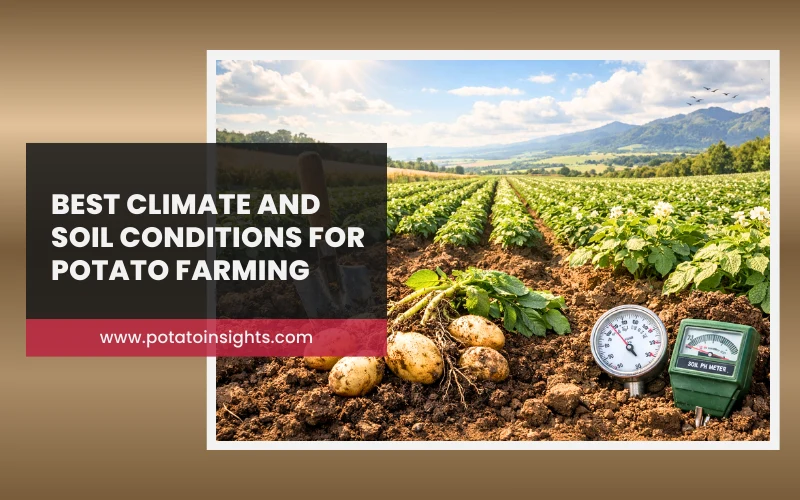
Potato farming gives better results when soil and climate match the plant’s needs. Since potatoes grow below the surface, the soil must be loose, slightly acidic and able to drain water well. Cool weather helps tubers form properly, while hot conditions slow growth. These basics matter for both home growers and large farms.
Many crop losses happen not because of poor seeds, but because soil and weather checks were skipped early. Simple steps like testing soil, watching local temperatures and preparing land before planting can save money and effort.
This guide explains how to choose and prepare land so potato crops grow healthier and more evenly.
Did You Know?
Potatoes need soil pH between 5.0 and 6.0 for best growth and temperatures above 27°C slow potato tuber growth.
Why Soil Matters in Potato Farming
Soil is more than dirt. For potatoes, it determines how long roots can spread, how air and water move through the ground and how easy it is for tubers to form. If the soil is too hard, tubers become misshapen. If water stays too long, the tubers may rot. Farmers must test and adjust soil before planting.
Potatoes form tubers below the surface. These tubers need space and air. Soil that holds too much water cuts off air and invites rot. Soil that holds too little water dries out tubers and limits growth. Many growers test soil months before planting to plan any changes.
Key Soil Conditions
Good soil for potatoes has three main features: texture, pH and drainage.
Soil Texture
Texture tells you how much sand, silt and clay are in the soil.
- Sandy loam: Loose, not heavy and drains water well.
- Clay: Sticky and heavy. It holds water too long.
- Silt: Smooth but may hold too much water.
A simple test:
- Take a moist handful and squeeze.
- If it stays in a firm ball, it has too much clay.
- If it does not hold any shape, it may be too sandy.
Also read: Idaho Potatoes vs Russet Potatoes – What’s the Real Difference?
Here is a quick guide:
| Soil Type | Water Flow | Fit for Potatoes | What to Do |
|---|---|---|---|
| Sandy loam | Drains well | Good | Add organic matter |
| Clay loam | Drains slowly | Poor | Add sand and compost |
| Silt loam | Fair | Okay | Add organic matter |
| Sandy | Very fast | Fair | Add compost and mulch |
Soil pH
Potatoes prefer slightly acidic ground. A pH of 5.0 to 6.0 helps nutrients reach the plant and lowers the risk of soil disease. You can use a home test kit or send soil to a lab. If pH is too high (more alkaline), sulfur can lower it. If too low, lime can raise it.
Drainage
Good drainage means water moves through soil at the right speed. Water that stays too long causes rot. One simple test: dig a hole 30 cm deep, fill with water and see how fast it moves out. If it drains in 1–2 hours, it is workable.
Climate Needs You Should Know
Potatoes do best in cool, mild weather. If it gets hot, the plant stops making tubers and focuses on leaves.
- Best range: 16–21°C during the day
- Too hot: Above 27°C slows tuber growth
- Cool nights: Around 10°C help tubers form
- Frost: Can harm young plants, so choose planting time with low frost risk
Rain helps, but too much can drown roots. Aim for even moisture, not soggy ground. In dry spells, water about 2–3 cm per week, spread out over a few days.
How to Get Soil Ready
Getting soil ready takes time. Start this work months before you plan to plant.
- Soil Test: Do this 4–6 months ahead.
- Organic Matter: Add compost or well-rotted manure 2–3 months before planting.
- pH Adjustment: Work in needed amendments early so the soil can change over time.
- Tilling: Two weeks before planting, till soil about 30–35 cm deep and remove stones.
Also read: Top 10 Highest Potato Producing States in the US
Common Soil Issues and What to Do
Potato growers face some common root problems. Here are simple fixes:
Hard Soil
Soil that is compact restricts tuber growth. Heavy walking or machinery makes this worse.
Fix: Till deeper and add organic matter like compost to soften it.
Too Much Water
Water that does not move away quickly causes rot.
Fix: Make raised beds 15–20 cm above ground so water can drain. Space rows about 90 cm apart so air can flow.
Lack of Nutrients
Yellow leaves can mean low nitrogen. Purplish leaf edges can mean low phosphorus.
Fix: Use a balanced fertilizer after a soil test so you give what’s needed without too much nitrogen.
How to Plan Planting Time
Follow this timeline for better results:
- 4–6 months before: Test soil and plan changes.
- 2–3 months before: Add compost and mix it in.
- 2 weeks before: Till soil and shape beds.
- Planting: Wait until soil at 10 cm depth reaches about 7°C.
- Growing time: Water as needed and keep weeds low.
Crop Rotation for Potato Land
Planting potatoes in the same spot each year raises disease risk. A rotation helps keep soil healthy. A simple plan:
- Year 1: Potatoes
- Year 2: Beans or peas (these add nitrogen)
- Year 3: Grains like wheat or oats
- Year 4: Leafy vegetables like cabbage
Do not plant tomatoes, eggplants, or peppers (same plant group) near where potatoes were planted recently.
When Soil Is Not Ideal
If your soil is not what potatoes need, don’t worry. You still have options:
- Containers: Grow potatoes in large pots with good soil mix.
- Raised beds: Fill them with loose soil and compost.
- Straw bale: Plant in straw that holds water and lets air through.
- Choose right type: Some strains handle tough soil better.
Improving soil is a long path. Adding organic matter over several years makes soil better at holding water and air.
Conclusion
Potatoes need certain soil and weather to grow well. Loose soil, the right pH and cool air help tubers form. Work on soil months before planting and follow a good rotation schedule. With care and simple tests, your land can give better, bigger yields.
Also read: Top 10 Potato Producing Countries in the World (2026)
Frequently Asked Question (FAQs):
-
What pH should I aim for in potato soil?
Aim for pH between 5.0 and 6.0 for good growth.
-
Is sandy soil bad for potatoes?
Sandy soil drains too fast but can be improved with compost.
-
Can potatoes grow in hot weather?
Potatoes struggle above 27°C and grow best in cool weather.
-
Do potatoes need a lot of water?
They need regular moisture but not soggy ground.
-
How often should I rotate potato crops?
Avoid planting potatoes in the same spot for at least four years.
Image credit: Potato Insights
Research sources:
Cornell University Cooperative Extension soil pH guide
USDA Agricultural Research Service on potato soil
FAO crop temperature and climate data
University of Idaho Extension crop rotation advice
University of Wisconsin-Madison Soil Science reports
Recent Articles



Follow us to receive updates🔔