Best Potato Farming Practices in India: From Planting to Harvest

Potato is one of the most common food crops in India and a regular part of daily meals in both villages and cities. Many people call it the “poor man’s friend” because it is easy to cook, easy to store and gives good nutrition at a low cost. It provides starch, vitamin C, vitamin B1 and minerals that fit well in everyday food.
Farmers across India grow potato mainly in the rabi season. The crop supports food supply, market demand and farm income in many states. In the 2024-25 season, India’s potato output reached about 60.18 million tonnes, which shows how important this crop remains.
As demand grows for fresh potatoes and also for chips, fries and other processed items, farmers want simple and effective ways to improve their crop. Clean seed, good field work, proper plant nutrition and the use of basic planting machines are some of the steps that help. This updated potato farming guide explains these methods using recent data and practical field knowledge.
Updated Global Potato Outlook (2024–2025)
Potato demand is rising around the world, and many countries are working to increase production to meet this need. Recent estimates for the season show the scale of potato farming across major regions.
- India
According to recent estimates, India’s potato production in 2024-25 reached around 60.18 million tonnes. Even official early estimates projected about 59.57 million tonnes for 2024-25, up 4.4% from the previous year. - China
China remains the largest potato producer in the world. For the 2025-26 season, its production is expected to reach about 101.1 million tonnes. - United States
Potato growers in the U.S. produced around 412 million cwt, a small drop of about 2.2% from the previous year. This decline mainly comes from lower planted area in some states, even though the average yield per acre has improved slightly. - European Union (EU)
The EU expects potato acreage to rise by roughly 5.5% for the 2025-26 season. This may help keep yields stable or slightly higher in major producing countries such as Germany, Poland, and the Netherlands.
France is set to reach around 9 million tonnes, which is about 7% higher than last year. - Russia
Russia is likely to harvest about 7.5 million tonnes in 2025. This is better than 2024 but still below the levels seen in 2023.
In India, some states show much higher yield per hectare than older national averages. For example, in one top producing state, yields have reached over 32 tonnes per hectare in many districts.
This rise shows that with good practices seed, soil, water and care, potato farming remains a strong income source and meets rising demand.
RELATED: Top 10 Potato Producing States in India
Why Solid Farming Practices Matter
Potato grows fast but also reacts fast to problems: poor soil, bad seed, uneven planting, pest or water stress, all can cut yield sharply. But recent high production proves that many farmers can get good results when they follow simple, solid steps. That includes good seed, correct soil prep, plant care and increasingly, smart use of machines.
Popular Varieties (Short / Medium / Long Season)
Farmers still use many of the trusted varieties. For short, medium and long-duration crops in India:
- Early (about 70-90 days): Kufri Pukhraj, Kufri Chandramukhi, Kufri Ashoka
- Medium (about 90-100 days): Kufri Jyoti, Kufri Bahar, Kufri Anand, Chipsona (1,2,3), good for chips / fries due to lower sugar level
- Late (about 110-130 days): Kufri Giriraj, Kufri Sinduri
Variety must match your climate, soil, water supply and market goal (fresh vegetable vs processing).
Land Preparation & Soil Requirements
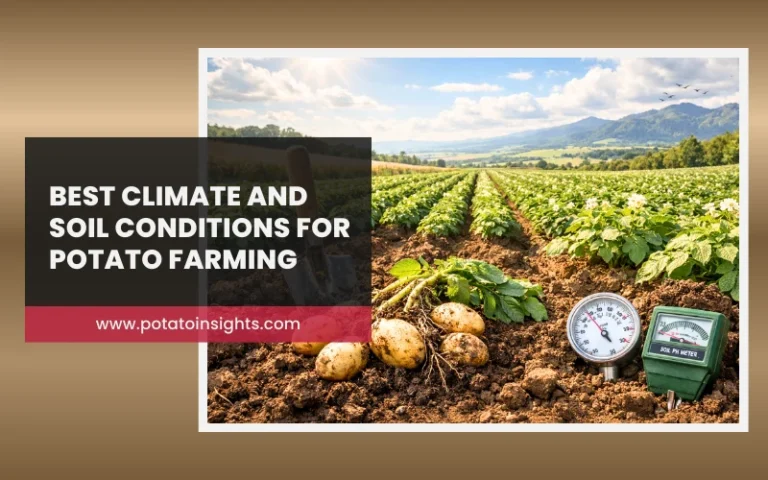
Potato needs loose, well-drained soil. Best fields are sandy-loam or loam with good organic matter. These help roots grow, water drain and tubers expand well.
Typical land work before planting:
- One or two deep ploughings (25-30 cm)
- Harrowing or cross-cultivation to break clods
- Ridge + furrow or raised bed layout to help drainage and ease planting
Adding organic manure or compost helps soil health and supports good early growth.
Seed Selection, Pre-sprouting & Treatment
Good seed is key. For planting:
- Use clean, healthy tubers of 30-60 g
- If tubers are bigger, cut so each piece has 2-3 eyes (sprouts)
- Discard any showing spots, soft rot, scab or pest damage
Seed rate: 600-800 kg per acre (varies by field and region)
Pre-sprouting (chitting):
- Keep tubers in cool, shaded room for 1-2 weeks after cold storage
- Optionally treat with hormone (e.g. gibberellic acid) to get quick sprouts
- Let tubers dry in shade after treatment before planting
Seed treatment before sowing:
Some farmers use safe seed-treat products to avoid early fungal issues. Spray, let dry, then plant. This reduces early losses and gives better tuber quality.
Planting: Depth, Spacing & Machine Use
Correct planting helps yield:
- Planting depth: 5 cm under soil, shallow planting may cause greening, poor tuber formation, pest damage.
- Spacing: Rows 60 cm apart, plants 10-15 cm on ridge top. Ridges 30-40 cm wide.
Use of Machine Planters
More farmers now use potato-planter machines or sweet potato-planter machines. Benefits:
- Seed placed at correct depth and spacing
- Uniform sowing across the field
- Saves labour and time, many hectares planted quickly
- Helps avoid human error in spacing
This makes planting easier and often improves overall crop uniformity and yield.
RELATED: Smart Packaging Trends Changing the Potato Chips and Snacks Market
Irrigation, Nutrition & Crop Care
Potato needs consistent but not excessive water. Watering plan:
- Light irrigation a day before planting
- Another after planting
- Then water every 6-8 days depending on soil and weather
- Stop irrigation 7-10 days before haulm removal (pre-harvest)
Drip irrigation works very well water goes directly near roots, reduces waste, helps maintain even moisture and lowers disease chances from too-wet leaves.
Nutrient need per hectare (common guideline):
- Nitrogen: 120-150 kg
- Phosphorus: 60-80 kg
- Potassium: 80-100 kg
- Sulphur: 20-25 kg
- Zinc (if soil is low): 5-10 kg
Apply half the nitrogen at planting, rest after 30 days. Others mostly at planting.
Also watch weeds, pests (aphids, moths) and fungal diseases. Light weeding, regular monitoring and timely safe sprays help.
Earthing Up (Inter-cultural Operation)
Earthing up covers the forming tubers, protects them from light (avoids greening) and reduces pest risk. Recommended schedule:
- First earthing up: 20-25 days after planting
- Second: 40-45 days after planting
Good field care at this stage helps tubers grow evenly and strengthens plant support.
Harvesting and Post-Harvest Handling
When leaves start yellowing and drying, the crop is ready. Correct harvest steps:
- Stop irrigation 7-10 days before haulm removal
- Cut haulms so skin hardens
- Use manual tools or mechanical harvesters (common in larger farms)
- Mechanical harvesters dig and gently lift tubers with less damage
- Sweet potato-type harvesters are used for delicate tubers
- Mechanical harvesters dig and gently lift tubers with less damage
After harvest, keep tubers in shade so they dry a bit avoid direct sun. For long storage or bulk sale, use a cool, dark storage (cold rooms) to avoid sprouting or rot.
With good care, farms are getting strong yield and good-quality tubers.
Why Is Promising for Potato Farming in India
- Production at national level has reached record highs 60 million tonnes.
- Some states, with good practices and processing demand, show yield 32 t/ha or more.
- Demand for processed potatoes (chips, fries, etc.) is growing good sign for farmers who grow processing-grade varieties and use proper farming methods.
- Use of machines (planters, harvesters) reduces labour, speeds work and gives better uniformity helpful for both small and large farms.
Thus, a mix of traditional good field practices + modern tools + right variety + proper care can make potato farming more rewarding than ever.
RELATED: The Truth About Potato Peel Waste Around the World
Frequently Asked Questions (FAQs):
-
What is India’s potato production in 2024-25?
India produced about 60.18 million tonnes.
-
Which yield per hectare is considered good now?
In many well-managed areas, yield of 30-32 tonnes per hectare is reported.
-
Are potato planter machines helpful?
Yes, they ensure seed are planted at correct depth and space, cut labour and help cover more land quickly.
-
When should irrigation stop before harvest?
About 7-10 days before cutting haulms is a good practice.
-
Which Indian state is leading processed potato production recently?
In 2024-25, Gujarat stands out as a major supplier of potatoes for chips/fries and processed products.
Image credit: Potato Insights
Research sources:
Potato production projected at 59.57 million tonnes in 2024-25 – Business-Standard
Gujarat leads in processed potato production – news articles & state reports
Agricultural yield data for potato in Gujarat – CEIC data
Study on value chain of potato in India – Plant Archives journal
Some recent analyses show that over the past decades, area under potato cultivation, total production and yield have gradually risen – RSIS International
ICAR potato guides
Recent Articles



Follow us to receive updates🔔