Chemical Withdrawals Hit UK Potato Growers
UK potato growers warn that chemical withdrawals could shrink crop area and lead to supply gaps in supermarkets.
Key Highlights
- Retailers fear shelf gaps after chemical withdrawals
- UK potato area has already fallen by almost 25%
- Fresh sector may face more pressure than processing
- Seed growers warn of climate and cost risks
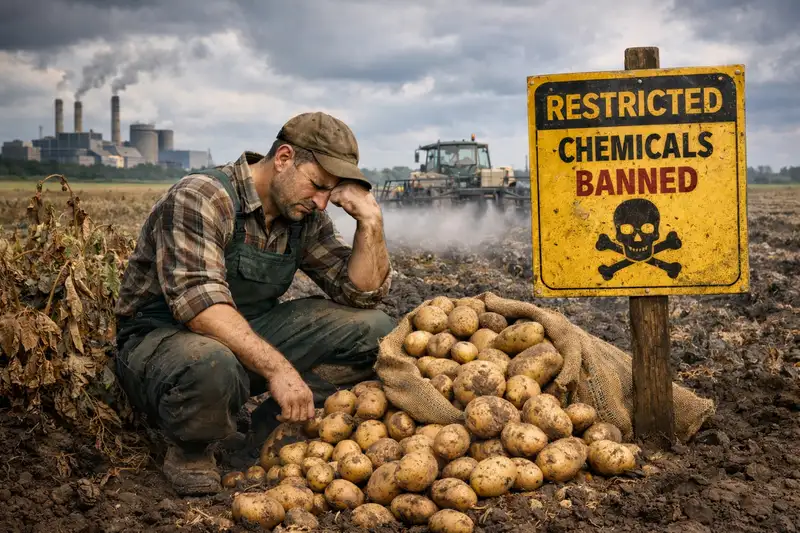
The UK potato industry is facing fresh concern after the removal of key crop chemicals. At the British Potato Event, speakers warned that losing products such as Nemathorin could shrink the potato area even further. Retailers worry this may lead to supply gaps in stores.
Retailers Fear Supply Gaps
Phil McCaul of Greenvale told delegates that supermarkets need potatoes on shelves all year. In recent seasons, there have already been short periods when supply or quality fell short.
He said the UK potato area has dropped by almost a quarter in recent years. In a worst-case view, it could fall by more than 40 percent over the next decade.
The fresh potato market may feel the most pressure. Fresh crops require high quality and there are fewer resistant varieties available compared to the processing sector. McCaul said variety development is key for long-term supply, but it takes years of planning and testing before new types reach farms.
Research by Greenvale shows shoppers care about clear cooking guidance on packs. Still, the need for new and stronger varieties remains important for supply security.
Also read: Top 10 Potato Producing Countries in the World
Seed Sector Faces Its Own Strain
At a seminar hosted by GB Potatoes, Aberdeenshire grower Mike Wilson spoke about seed supply. He said his region in Scotland is well suited to growing high-quality seed potatoes, though the process is complex.
Some varieties are dropped after a short time if they do not perform well. Lower yields in 2025 increased costs for growers. While Wilson’s farm was less affected by weaker demand from Egypt than others, falling prices still reduced returns.
Climate change is another worry. The spread of aphids has become a growing problem, adding more risk to seed production.
Wilson’s farm grows 35 different varieties, rotating crops with grass and keeping cattle as part of a mixed system. He aims to produce strong seed with fewer generations before reaching commercial farms. Reducing the time mini-tubers are grown from three years to two has helped speed supply, though it adds cost.
Support and Outlook
Despite fewer crop protection options and rising risks, Wilson said Scotland can continue supplying high-quality seed. He pointed to support from the James Hutton Institute and SASA, along with investment from seed companies.
With chemicals being removed and climate risks rising, the UK potato sector faces a testing period. Growers, seed producers and retailers agree that new varieties and long-term planning will be vital to keep potatoes available year-round.
Image credit: Potato Insights
News Source: fruitnet
Recent Articles


Follow us to receive updates🔔