The Journey of McDonald’s French Fries From Farm to Fryer

Most people see a box of McDonald’s french fries as a simple snack. But behind those fries is a long journey that starts on farms, moves through processing plants and ends in a fryer at the restaurant. Each step must stay steady and clean or the fries will not taste the same.
In 2025, demand for fries is rising across the world. More homes buy frozen potatoes and quick-service chains are opening in more cities. This makes the fry supply chain even more important. The article below explains the full journey, based on real farm practices, processing steps and updated global market data.
Global Fry Demand in 2025
The processed potato market for 2024–25 sits near USD 39.5 billion. Frozen fries remain one of the strongest product groups. Large regions such as the U.S., EU, China, India and the Middle East shape the trade flow. More food-service outlets, home freezers and busy urban eating habits push demand higher each year.
This rise means simple field rules, clean plant systems and steady cold-chain movement must work together. McDonald’s needs potatoes of the same shape, length and cooking behaviour to keep fry taste uniform worldwide.
From Soil to Potato: The Farming Stage
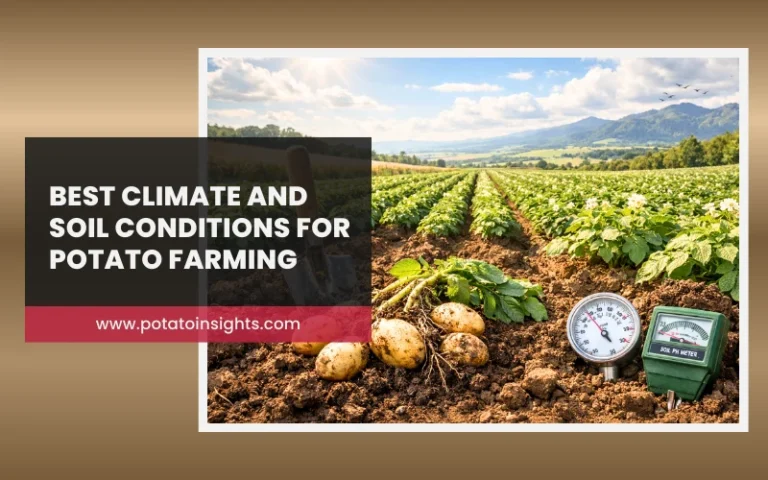
Good fries always start with good potatoes. Farms follow clean steps such as:
- using proper seed
- planting in loose, well-aerated soil
- keeping fields cool
- watching water levels
- checking plant health often
Potatoes for fries must be long, firm and even in shape. This allows smooth cutting in machines and even cooking later.
Weather has a strong hand in potato size. Too much heat or rain changes shape and moisture inside the tuber. This is why farms watch soil moisture, irrigation and plant nutrition closely.
Storage matters too. After harvest, potatoes rest inside dry, cool stores with stable temperature and airflow. This keeps starch levels in balance.
RELATED: Smart Packaging Trends Changing the Potato Chips and Snacks Market
Potato Varieties Used for McDonald’s Fries
McDonald’s uses only a few potato types that match global fry quality rules. These varieties give long strips, crisp surface and soft inside.
Main varieties
- Russet Burbank
- Ranger Russet
- Umatilla Russet
- Shepody
Newer approved varieties
- Clearwater Russet
- Blazer Russet
These types hold shape better, handle weather shifts and fry evenly.
Why customers cannot buy these raw
These potatoes go straight to approved suppliers like McCain. They are washed, peeled, cut, blanched, pre-fried, frozen and packed before they ever reach a restaurant. Raw forms are not sold in stores.
The Early McDonald’s India Journey: A 1990s Breakthrough
When McDonald’s India worked with McCain Foods in the early 90s, they expected to find local suppliers ready for fry-grade potatoes. Instead, they found mostly table-grade varieties short, moist and not good for french-fry processing.
McDonald’s needed potatoes that were:
- Long
- High in solids
- Low in moisture
Farmers often used seeds saved from older crops, which kept quality uneven.
To solve this, McDonald’s and McCain worked closely with farmers in Gujarat. They introduced clean, simple farming changes:
1. Better irrigation
Farmers used flood irrigation, which wasted water and helped fungus and pests spread. After training, farms shifted to sprinklers. This improved plant health and cut water waste.
2. Better soil and fertilizer control
Nitrogen use was cut by one-third to improve tuber quality and reduce plant stress.
3. Better storage conditions
Cold stores used to hold potatoes at 3–4°C. This caused sugar buildup, which leads to dark fries.
McDonald’s asked suppliers to use higher temperatures of 8–12°C. This kept potatoes firm longer and controlled sugar levels.
4. Better cold-chain transport
Potatoes moved from stores to McCain plants in GPRS-enabled freezer trucks.
These trucks hold a steady –18°C, which protects product texture.
GPRS tracking helps keep the timing accurate.
These steps became the base of the Indian fry-supply system. Many of these methods continue today and also guide new farming regions.
RELATED: Top Benefits of Using a Nubbin Grader for Potatoes French Fries
Inside the Processing Plants: From Potato to Frozen Fry
Once potatoes reach the processing plant, a clean set of steps turn them into frozen fries.
1. Sorting and washing
Soil, stones and damaged potatoes are removed.
2. Peeling
Steam or abrasion removes skin. Peeling is controlled because too much waste reduces yield.
3. Cutting
High-speed cutters slice potatoes into long strips. The approved potato types help produce long, even pieces.
4. Blanching
This hot-water step removes excess starch and sets the colour.
5. Partial frying
A short fry forms a thin layer on the outside. This helps fries stay crisp when cooked at restaurants.
6. Freezing
Rapid freezing protects shape and stops fries from sticking together.
7. Packing
Fries are packed and labeled with batch details for tracking.
Plants also check:
- Strip length
- Colour
- Firmness
- Moisture level
- Oil level
- Dry-matter consistency
This keeps each batch even and ready for the restaurant fryer.
How Frozen Fries Reach Restaurants
Frozen fries go from the plant to distribution centers and then to McDonald’s outlets. Trucks maintain fixed freezer temperatures so fries do not soften or break.
At each outlet, staff follow simple, fixed rules:
- Fry at a set temperature
- Use clean oil
- Control the fry time
- Avoid holding fries too long
- Use the right salt level
These steps keep the outside crisp and the inside soft. The box of fries you get in Mumbai, Delhi, Chicago or Dubai should taste nearly the same.
Challenges Across the Journey
Even with clear steps, fries face common challenges:
Farm issues
- uneven tuber shape
- weather pressure
- water imbalance
- nutrient imbalance
Plant issues
- Over-peeling
- Breakage during cutting
- Colour change during frying
Transport issues
- Cold-chain breaks
- Delays
- Stacking problems
Restaurant issues
- Wrong fry time
- Old oil
- Fries kept too long before serving
McDonald’s suppliers use routine checks to limit these problems. Farms get seed support, soil checks and field visits. Plants use sensors for temperature, moisture and line speed.
RELATED: Top 10 Potato Producing Countries in the World
Conclusion
McDonald’s french fries take a long, controlled journey before reaching your plate. This journey starts on farms where potatoes grow under clean, guided methods. It continues through plants that wash, cut, blanch, fry and freeze them with care. It ends at restaurants where staff fry them fresh in small batches.
The 2025 fry market is growing fast and the systems built over the last three decades from Gujarat farms to modern processing plants, help keep McDonald’s fries crisp, warm and familiar every time.
Frequently Asked Questions (FAQs):
-
Why does McDonald’s work with only a few potato types?
Because these types grow long and firm and they fry evenly.
-
Why were table potatoes not good for fries?
They were short, held extra moisture and turned dark during frying.
-
Why did McDonald’s switch farmers to sprinklers?
Sprinklers save water and reduce pest and fungus problems.
-
Why store potatoes at higher temperatures?
Higher storage reduces sugar buildup and keeps fry colour light.
-
Why freeze fries before sending them to restaurants?
Freezing protects shape and keeps the final fry result steady.
Image credit: Potato Insights
Research Sources:
McDonald’s India Blog – 20 Years of the Potato Revolution – https://mcdonaldsblog.in/2016/10/20-years-the-potato-revolution/
The Global Potato-Processing Industry: A Review of Production, Products, Quality and Sustainability — MDPI Food journal
https://www.mdpi.com/2304-8158/14/10/1758
Potato Processing Market Size, Share & Forecast to 2030 — Grand View Research (2023-2030)
https://www.grandviewresearch.com/industry-analysis/potato-processing-market-report
FAO: Potatoes — So Familiar, So Much More to Learn (2025) — Explains potato’s global role and supply context
https://www.fao.org/publications/news-archive/detail/potatoes-so-familiar-so-much-more-to-learn/en
2025 Global Potato Market Report — Overview of commodity market size and trends for 2025
https://www.marketdataforecast.com/market-reports/potato-market
USDA “Potatoes – 2024 Summary” Report (released September 2025) — gives recent U.S. processing potato statistics https://www.nass.usda.gov/Publications/Todays_Reports/reports/pots0925.pdf?utm_source=chatgpt.com
Recent Articles



Follow us to receive updates🔔