Complete Frozen French Fries Production Line Guide (2026)
Complete frozen french fries production line guide covering machines, process, costs, capacity, freezing, frying systems and factory setup in 2026
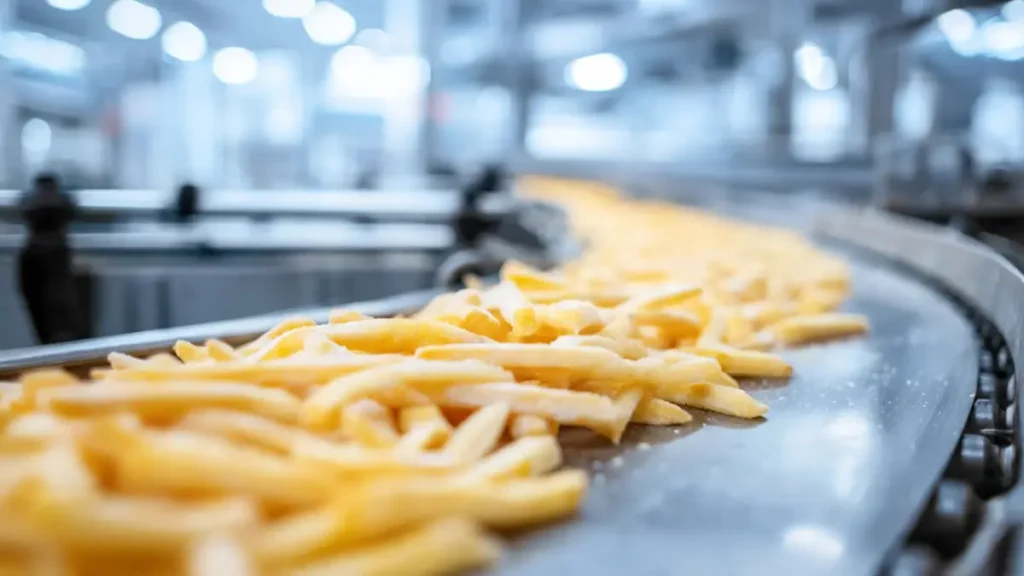
Frozen french fries are now one of the fastest-growing potato products in the food processing market. Fast food chains, supermarkets, cloud kitchens and retail brands all need steady fry supply. That demand is pushing many food businesses to invest in a complete frozen french fries production line.
The global frozen potato market crossed billions of dollars in recent years and Asia is seeing strong growth from quick-service restaurants and ready-to-cook food demand. For processors, that means one thing. There is still room for new factories that can produce good quality fries at stable output.
This guide explains how a complete frozen french fries production line works, what machines are used, production capacity, costs, process flow and what buyers should check before investing.
What Is a Complete Frozen French Fries Production Line
The global frozen french fries market was valued at around USD 24.5 billion in 2024 and is on track to keep growing through 2033. More food processors are investing in complete production lines right now than at any point in the past decade.
A complete frozen french fries production line is a group of connected food processing machines used to turn raw potatoes into frozen ready-to-fry french fries.
The line handles every stage from washing to freezing and packing. Some small plants run semi-automatic systems, while large factories use fully automatic lines with continuous production.
Most commercial lines include:
- Potato washing and peeling
- Sorting and inspection
- Cutting
- Blanching
- Drying
- Frying
- Cooling
- Freezing
- Packaging
The goal is simple. Produce fries with the same size, texture, color and taste in every batch.
And honestly, that consistency is where many new factories struggle.
Also read: Top Benefits of Using a Nubbin Grader for Potatoes French Fries
You might also like
-
 Top Benefits of Using a Nubbin Grader for Potatoes French Fries
 -
 Latest Trends in the Potato Snack Industry (2026)
 -
 Why the Netherlands Leads the Global Potato Industry
 -
 Best Potato Farming Practices in India: From Planting to Harvest
 -
 Why Idaho Potatoes Are So Famous
 -
 India Frozen Potato Products Market Growth 2026: What’s Driving the Boom
Why Frozen French Fries Demand Keeps Rising
Frozen fries are no longer limited to large fast-food chains. Retail packs, cafes, school kitchens and cloud kitchens now buy them in large volumes.
According to several food industry reports between 2024 and 2026, frozen potato demand continues to grow across Asia, the Middle East and Africa. That matters because processors closer to these markets can reduce shipping time and cold storage costs.
Main Demand Drivers
| Factor | Why It Matters |
|---|---|
| Fast food growth | Restaurants need stable fry supply |
| Retail frozen foods | Supermarkets sell more ready-to-cook products |
| Cloud kitchens | Quick preparation saves labor time |
| Longer shelf life | Frozen fries reduce waste |
| Export opportunities | Many countries import processed potato products |
A small processing plant supplying local restaurant chains can sometimes grow faster than an export-focused unit. Most guides skip that point completely.
Main Machines in a Frozen French Fries Production Line
Every machine has a specific job. One weak stage can reduce final product quality badly.
Potato Washing and Peeling Machine
Fresh potatoes arrive with soil, stones and surface damage. The washing machine removes dirt while peeling machines remove the skin.
Brush peelers and steam peelers are both common.
Steam peeling costs more but usually reduces potato loss.
Sorting Conveyor
Workers or optical systems remove damaged potatoes, green potatoes and rotten pieces before cutting starts.
Bad raw material creates dark fries after frying. So this step matters more than many buyers think.
French Fries Cutting Machine
The cutter slices potatoes into strips with fixed dimensions.
Common fry sizes include:
- 7 mm
- 9 mm
- 10 mm
Straight-cut fries remain the most common product globally.
But here’s something many first-time buyers miss. Cutter quality directly affects fry breakage percentage later in the process.
Also read: How to Choose the Right Conveyor for Potato Chips
Blanching Machine
Blanching removes extra starch and helps maintain fry color.
The fries move through hot water for a controlled time and temperature. Poor blanching can create uneven color after frying.
That means more rejected product later.
Dewatering and Drying Machine
Before frying, surface moisture must be reduced.
This stage helps:
- Reduce oil absorption
- Improve texture
- Stabilize frying
Some factories use vibration systems combined with air drying tunnels.
Continuous Frying Machine
This is one of the most important parts of the line.
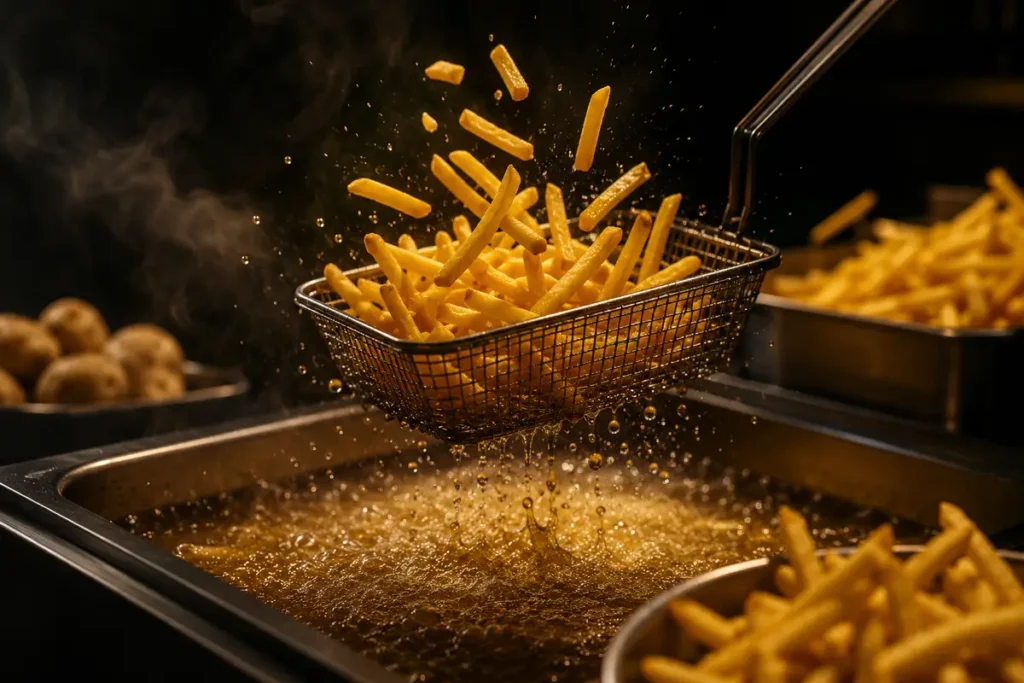
The fries pass through hot edible oil for partial frying. Temperature control is very important because over-frying changes color and texture quickly.
A stable fryer also helps reduce oil waste.
And oil costs are not small anymore.
Cooling Conveyor
Freshly fried fries need short cooling before freezing. Without cooling, the freezer works harder and product quality may drop.
IQF Freezer
An Individual Quick Freezing system freezes fries rapidly at very low temperatures.
Fast freezing helps maintain:
- Texture
- Shape
- Taste
- Shelf life
Most commercial plants use tunnel freezers or fluidized bed freezers.
Packaging Machine
The final step packs frozen fries into retail or bulk bags.
Popular pack sizes include:
- 1 kg
- 2.5 kg
- 5 kg
Export buyers often request custom private-label packaging.
Frozen French Fries Production Process Step by Step
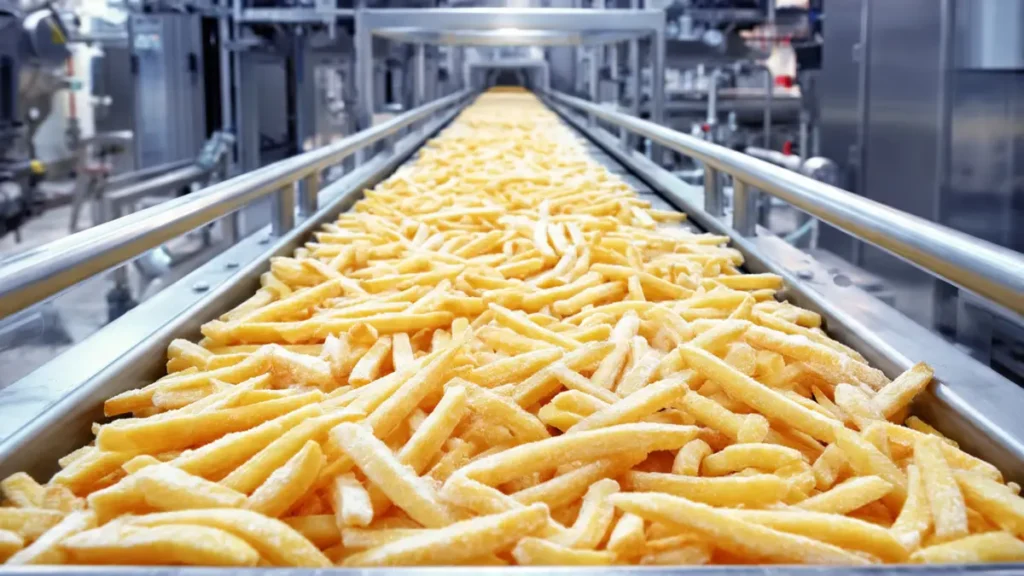
Here is the typical process flow used in commercial plants.
| Production Step | Main Purpose |
|---|---|
| Potato receiving | Raw material inspection |
| Washing and peeling | Remove dirt and skin |
| Sorting | Remove bad potatoes |
| Cutting | Create fry shape |
| Blanching | Control starch and color |
| Dewatering | Remove surface water |
| Frying | Partial cooking |
| Cooling | Reduce heat before freezing |
| IQF freezing | Long-term preservation |
| Packaging | Retail or bulk packing |
| Cold storage | Maintain frozen condition |
A medium-sized factory can process several tonnes per hour depending on automation level.
So what does that mean for new investors?
Capacity planning becomes very important before buying equipment.
Also read: Idaho Potatoes vs Russet Potatoes – What’s the Real Difference?
Semi Automatic vs Fully Automatic French Fries Line
Not every factory needs a fully automatic setup.
Semi Automatic Line
Best for:
- Small businesses
- Startup food factories
- Local market supply
Advantages:
- Lower investment
- Easier installation
- Lower power use
Disadvantages:
- Higher labor need
- Lower output
- More production variation
Fully Automatic Line
Best for:
- Export plants
- Large-scale production
- High-volume restaurant supply
Advantages:
- Stable quality
- Higher output
- Lower labor dependence
Disadvantages:
- Higher setup cost
- More technical maintenance
Many medium processors start semi-automatic and expand later once sales become stable.
That approach reduces financial pressure early on.
Production Capacity Options
French fries lines come in different production capacities.
| Capacity | Typical Buyer Type |
|---|---|
| 100-300 kg/hour | Small startups |
| 500 kg/hour | Local commercial supply |
| 1 ton/hour | Regional food processors |
| 2-5 ton/hour | Large industrial plants |
Higher capacity does not always mean better profit.
If cold storage, raw potato supply and market demand are weak, large capacity can become expensive very quickly.
How Much Does a Frozen French Fries Production Line Cost
Prices vary based on automation, country of manufacture, materials and freezing system.
Approximate 2026 ranges:
| Line Type | Estimated Price Range |
|---|---|
| Small semi-auto line | $50,000 to $150,000 |
| Medium automatic line | $200,000 to $600,000 |
| Large industrial line | $1 million+ |
Additional costs usually include:
- Cold storage
- Boiler system
- Water treatment
- Electrical setup
- Installation
- Transport
Some buyers focus only on machine price and forget utility costs completely.
That mistake gets expensive later.
Also read: Top 10 Potato Producing Countries in the World
Important Things to Check Before Buying
Potato Variety Compatibility
Not every potato works well for fries.
Good processing potatoes need:
- High dry matter
- Low sugar
- Uniform size
Wrong potato variety often creates dark fries after frying.
Oil Consumption
Frying oil becomes a major running cost over time.
Ask suppliers about:
- Oil filtration
- Oil circulation
- Heating efficiency
Energy Consumption
Freezing and frying systems consume large amounts of power.
Energy-efficient equipment can reduce long-term operating costs significantly.
Stainless Steel Quality
Food-grade stainless steel helps with hygiene and machine life.
Many factories prefer SUS304 material.
Spare Parts and Service
A production line stopping for even one day can cause major losses.
Check whether spare parts and technical support are locally available.
Common Problems in French Fries Processing
Dark Fry Color
Usually caused by:
- High sugar potatoes
- Poor blanching
- Incorrect frying temperature
Excess Oil Absorption
This often happens because of weak drying before frying.
Broken Fries
Poor cutting quality and rough conveyor movement can increase breakage.
Uneven Freezing
Weak airflow inside the freezer may create ice problems.
And fixing freezing issues later is usually much harder than preventing them early.
Best Markets for Frozen French Fries
Several regions continue importing frozen fries heavily.
Strong Import Markets
- Middle East
- Southeast Asia
- Africa
- South Asia
Restaurant growth in these regions continues to increase frozen potato demand.
Private-label supermarket fries are also growing quickly.
Suggested Factory Layout
A good production layout helps maintain food safety and smooth workflow.
Suggested sections include:
- Raw potato receiving area
- Washing and peeling section
- Cutting and blanching zone
- Frying section
- Freezing area
- Packing room
- Cold storage
Cross-contamination risks rise quickly when wet and dry areas are poorly separated.
Frozen French Fries Market — Why It’s Worth the Investment
The numbers tell a clear story. The global frozen french fries market was valued between USD 17 billion and USD 25 billion in 2024 across multiple research reports, with consistent projections for growth through 2033 and beyond at a compound annual rate of roughly 3.7 to 5.9% depending on the segment.
North America holds around 40% of global consumption, Europe around 30%, and Asia-Pacific around 23%, but that Asia-Pacific figure is growing the fastest.
In India, retail frozen fry sales grew 32% in urban markets recently, with tier-2 cities contributing meaningfully to that total. China exported 139,000 tonnes of frozen fries between January and May 2025 alone, compared to 206,000 tonnes for all of 2024.
That’s a dramatic shift in just a few years. Processors who waited are now playing catch-up on capacity.
Final Thoughts
A complete frozen french fries production line can become a strong long-term food processing business when raw material quality, production planning and market demand are handled properly.
The machine itself is only part of the story. Potato supply, freezing efficiency, oil management and cold chain handling matter just as much.
Many processors focus heavily on production speed at the beginning. But stable fry quality is usually what keeps restaurant buyers coming back year after year.
Also read: The Truth About Potato Peel Waste Around the World
Frequently Asked Questions (FAQs)
-
What is the capacity of a frozen french fries production line?
Small lines may produce 100 kg per hour, while industrial plants can process several tonnes per hour.
-
Which potato variety is best for french fries?
Potatoes with high dry matter and low sugar are generally preferred for fry processing.
-
How long can frozen french fries be stored?
Most frozen fries can be stored for several months under proper cold storage conditions.
-
Is a fully automatic fries line better?
Fully automatic lines offer stable production and lower labor dependence, but they cost more.
-
What is the biggest cost in french fries production?
Frying oil, electricity, freezing and cold storage are usually major operating costs.
Image credit: Potato Insights
Source:
- Frozen Potato Market Report — Grand View Research
- Potato Processing Systems — Kiremko
- Frozen Potato Products Market — IMARC Group
- French Fries Processing Line Information — Tummers Food Processing Solutions
- Frozen French Fries Market Size, Share, Trend Report, 2033 — MarketReportsWorld
- Global Frozen French Fries Market Size, Industry Trends & Forecast to 2035 — OMR Global
Recent Articles

Follow us to receive updates🔔