Latest Trends in the Potato Snack Industry (2026)
Potato snack industry trends in 2025-2026: flavor innovation, better-for-you growth, Asia-Pacific expansion, e-commerce and sustainability moves shaping the $98B market.
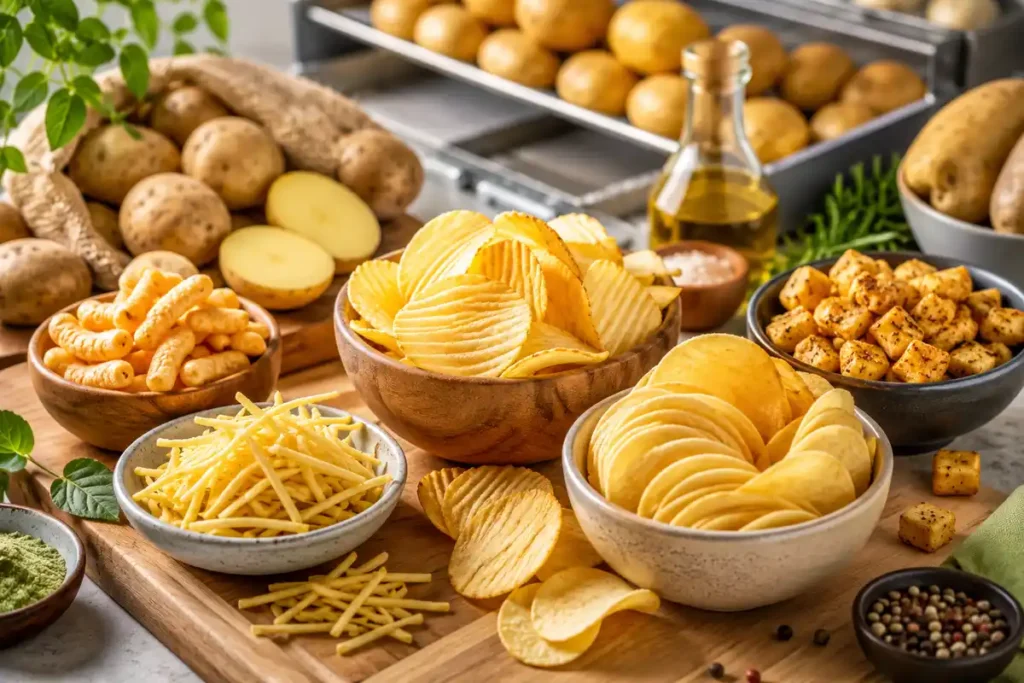
The global potato snack industry is worth around USD 98 billion in 2025 and is on track to reach USD 126.5 billion by 2032. That growth isn’t happening by accident. Changing eating habits, bold flavor experiments and a real consumer push for healthier options are reshaping what ends up on store shelves.
The timing matters too. In 2025 and 2026, several forces collided at once: inflation pushed shoppers toward value options, younger consumers demanded more adventurous flavors and health awareness nudged brands to rethink old recipes. The industry didn’t shrink under that pressure. It adapted.
This article covers the top trends driving the potato snack market right now, from flavor innovation and better-for-you products to e-commerce growth and sustainability moves. Whether you follow this category or just enjoy a bag of chips, what’s happening here is worth knowing.
The Potato Snack Market in 2025 and 2026
The numbers tell a clear story. The global potato snack market was valued at USD 94.8 billion in 2024 and crossed USD 98 billion in 2025. It’s growing at a rate of 3.7% per year. For a category this size, that’s consistent and meaningful growth.
Potato chips alone make up a huge chunk of the action. One research estimate puts the global potato chips market at USD 59.67 billion in 2026, with a projected climb to USD 80.25 billion by 2031 at a CAGR of around 6%.
North America holds the biggest share, with roughly 35% of the global market. But here’s the more interesting number: Asia-Pacific is growing faster than any other region, at a CAGR of around 6.85%. Cities in China, India and Southeast Asia are adding millions of new snack consumers every year.
Also read: Smart Packaging Trends Changing the Potato Chips and Snacks Market
Global Potato Snack Market Data (2025-2032)
| Segment | 2025 Value | Projected Value | CAGR |
| Global Potato Snacks | USD 98.1 Bn (2025) | USD 126.5 Bn (2032) | 3.7% |
| Global Potato Chips | USD 59.67 Bn (2026) | USD 80.25 Bn (2031) | 6.12% |
| Baked Chips Segment | Growing | Fastest-growing sub-segment | 6.98% |
| E-commerce Channel | Growing | Fastest-growing channel | 7.05% |
| Asia-Pacific Region | Growing | Fastest-growing region | 6.85% |
Sources: Persistence Market Research, Mordor Intelligence, Renub Research, 2025-2026
Flavor Is the Biggest Battleground
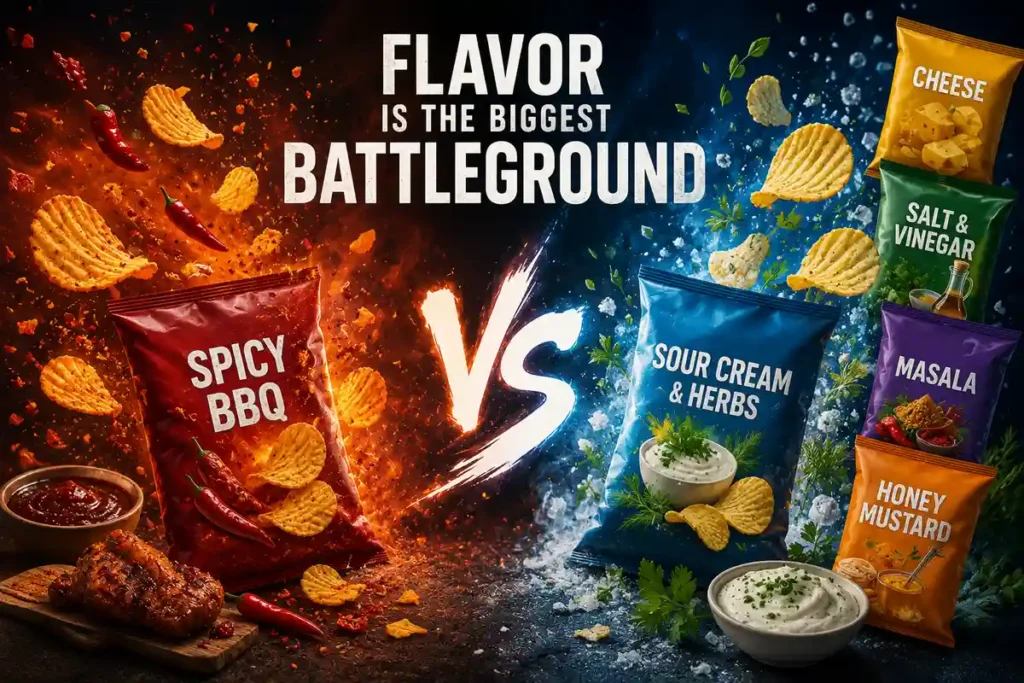
Classic salted chips still sell. But flavor is where brands win or lose today. Spicy and globally inspired varieties saw a 15% rise in consumer popularity in 2024 alone, according to SNAC International. Sriracha, harissa and Korean fried chicken are no longer niche. They’re mainstream.
You might also like
-
 How to Choose the Right Conveyor for Potato Chips
 -
 Idaho Potatoes vs Russet Potatoes – What’s the Real Difference?
 -
 Why Food Manufacturers Are Picking Potato Starch
 -
 Best High-Yield Potato Varieties in India
 -
 How Many Pounds of Potato Chips Are Eaten on Super Bowl Sunday?
 -
 The Truth About Potato Peel Waste Around the World
And the pace of launches is real. In April 2025, Lay’s revealed the top three finalists in its flavor contest, including a Wavy Korean-Style Fried Chicken chip inspired by South Korean cuisine. That same month, Utz teamed up with Alex’s Lemonade Stand Foundation to drop a lemonade-flavored chip that combined sweet and salty.
In May 2025, Pringles partnered with Miller Lite to launch Beer Can Chicken and Grilled Beer Brat chips.
These aren’t random stunts. Limited-edition drops create urgency, spark social media conversations and bring new buyers into the category. The “swicy” trend, which blends sweet and spicy, has gained especially strong ground with Gen Z and Millennial consumers.
What does this mean for the market? Flavor isn’t just a product feature anymore. It’s the main marketing event. Brands that launch slowly or play it too safe, are losing attention fast.
Social media is part of why this works. A new flavor gets picked up, shared and debated before it even hits most shelves. That creates a flywheel where consumer curiosity drives trial, trial drives data and data drives the next launch.
Better-for-You Is Moving From Niche to Normal
Roughly 41% of consumers now prefer lower-fat or baked chip varieties and demand for snacks with natural ingredients has grown 33%. Those aren’t small numbers in a category this size.
In December 2025, Lay’s added two new items to its baked lineup: Loaded Baked Potato and Roasted Garlic & Herbs, both made with olive oil and positioned as better-for-you options.
PepsiCo also closed 2025 with its Simply NKD launch across Doritos and Cheetos, stripping out artificial colors and flavors while keeping the bold taste intact.
The health trend isn’t replacing indulgence. It’s sitting next to it. Sales of snacks labeled low-sodium and organic grew 12% in one year, according to SNAC International’s 2025 State of the Industry Report. But the same report shows that consumers still want flavor and enjoyment. They’re just asking whether the ingredient list has to be long.
Key better-for-you product formats gaining ground:
- Baked chips (growing at 6.98% CAGR)
- Low-sodium and reduced-fat variants
- Organic and clean-label chips
- Kettle-cooked and artisanal formats
- Chips made with avocado or sunflower oil
Half of all US chip buyers say they now consider health-promoting ingredients when choosing a snack. That share is growing. And the conversations around ultra-processed foods are starting to reach mainstream consumers, which will put more pressure on brands to simplify their formulas.
Also read: Top 10 Potato Producing Countries in the World
Premium Chips Are No Longer a Luxury
Walk into any specialty grocery or scroll through an online snack retailer and you’ll find chips priced at two or three times the standard shelf price. And they’re selling.
Kettle-cooked chips, thick-cut varieties, chef-inspired flavors and artisanal brands with strong origin stories are all part of a broader premiumization trend. In November 2025, PepsiCo’s Red Rock Deli brand launched in India, bringing globally inspired gourmet flavors made with sunflower oil and kettle-cooked or popped methods.
That’s a premium brand entering a high-growth market on purpose.
Why does this work? Premium chips turn a basic snack into a little experience. The packaging matters. The story behind the flavor matters. Even the crunch matters differently when it’s positioned as craft.
This segment benefits from a clear pricing gap. When a small bag of artisanal chips costs more but delivers something genuinely different, a chunk of consumers will pay it. And those sales come with better margins.
Sustainability Is Now a Business Requirement
Around 68% of snack manufacturers have adopted eco-friendly packaging solutions, according to SNAC International’s 2025 State of the Industry data. That’s not a fringe trend. It’s the majority of the industry.
Frito-Lay made a public commitment to achieve 100% recyclable or compostable packaging across its brands. In March 2025, PepsiCo announced it was using bio-LNG fuel to transport potatoes to its Lay’s factories, cutting carbon emissions in the supply chain.
These aren’t just good press stories. They’re responses to real consumer pressure and incoming regulations.
But wait, does sustainability actually move purchasing decisions? The data says it’s starting to. Younger consumers, especially those under 35, are more likely to factor environmental claims into their snack choices. For brands targeting Gen Z and younger Millennials, sustainability messaging is becoming table stakes.
The shift is also practical. Brands with cleaner supply chains, reduced waste and responsible sourcing are building supply chain resilience at the same time. That’s a business reason beyond the marketing story.
Asia-Pacific Is the Growth Engine to Watch
North America is the biggest market by size. But Asia-Pacific is where the next decade of growth is happening. At a CAGR of nearly 7%, the region is outpacing every other geography.
China and India lead the charge, but the story isn’t identical in both places. In China, extruded snack innovation is driving new formats. In India, the instant-meal and on-the-go snack boom is connecting potato-based products to a growing middle-class consumer.
In Japan, high-purity ingredients and locally adapted flavors like seaweed and wasabi chip varieties are gaining strong followings.
A growing middle class, rapid urbanization and rising exposure to Western-style foods are the structural drivers. But local adaptation is what makes the difference. Brands that arrive with globally inspired products and local flavor sensibility are doing better than those that simply import their existing lineup.
The numbers back this up. Western-style snacks make up around 52% of the organized savory snack category in Asia-Pacific, with that share growing as modern retail formats expand into tier-2 and tier-3 cities.
Also read: Potato Consumption Per Capita by Country
E-Commerce Is Reshaping How Chips Are Sold
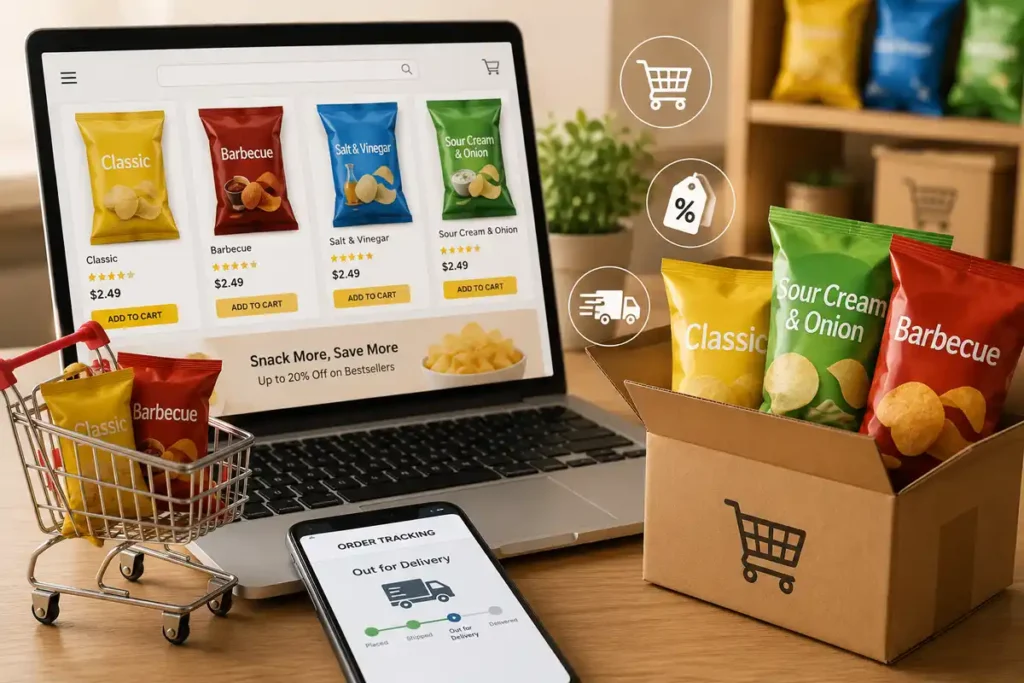
Online retail for potato chips is growing at a CAGR of 7.05%, faster than any other distribution channel. That’s a significant shift for a category that built its success through impulse buys in supermarket aisles.
Subscription snack boxes, direct-to-consumer launches and digital-first brands are all gaining ground. Private label chips grew 5.4% in dollar sales and 5.8% in units, with club, mass and online channels leading that growth.
Shoppers are increasingly comfortable buying snacks the same way they buy everything else and they like the ability to access niche or imported flavors that wouldn’t make it onto a local store shelf.
For brands, this opens real possibilities. A direct-to-consumer channel builds data, loyalty and margin that doesn’t depend on shelf space negotiations. Brands are also using AI tools to predict flavor trends and adjust inventory, which helps them respond faster to what consumers are actually searching for.
Inflation and Price Pressure Are Real Challenges
Here’s the harder part of the story. Despite strong innovation and growing demand, inflation created headwinds across the category in 2024 and 2025. In the US, the potato and tortilla chip category saw a slight sales dip in 2025, even as consumers kept chips as a regular purchase.
PepsiCo responded by announcing chip price cuts of up to 15%, a notable move for a category leader. The company was responding to real consumer pushback against higher grocery prices. US snackers are twice as likely to trade down to store brands as to pay full price at name brands right now.
At the same time, new FDA labeling rules are accelerating the need for cleaner ingredient lists and some reformulation work. That adds cost and complexity. Brands that can’t absorb the operational changes quickly will feel it in margins.
That said, the category is resilient. Snacking now accounts for half of all eating occasions in the US, according to Circana. Even under budget pressure, people don’t give up their snacks. They adjust, trade down or buy larger value packs. The category stays, even if the specific brands inside it shift.
The Bottom Line for the Potato Snack Industry
The potato snack industry in 2025 and 2026 is not a slow, stable category. It’s one of the most active segments in all of packaged food, driven by flavor speed, health awareness, premium demand and geographic expansion.
Brands that are winning right now share a few things: they launch flavors fast, they have a credible better-for-you story, they’re present in digital channels and they’ve adapted their positioning for markets like India, China and Southeast Asia.
Those that lean on tradition alone or wait too long to address health concerns, are feeling it in market share.
For consumers, this is actually a good moment. More choice, better ingredients, bolder flavors and real competition on price. The humble potato chip has become one of the most dynamic food products on the planet. And judging by the trajectory, that’s not changing anytime soon.
Also read: Why Food Manufacturers Are Picking Potato Starch
Frequently Asked Questions (FAQs)
-
How big is the global potato snack industry in 2025?
The global potato snack market is valued at around USD 98 billion in 2025 and is projected to reach USD 126.5 billion by 2032, growing at a CAGR of 3.7%, according to Persistence Market Research.
-
What are the fastest-growing segments in the potato chip market?
Baked chips, e-commerce distributios and the Asia-Pacific region are the three fastest-growing segments, each tracking at CAGR rates between 6.85% and 7.05% through the early 2030s.
-
Are consumers actually choosing healthier potato snacks?
Yes. Sales of low-sodium and organic snacks rose 12% in one year and roughly 41% of consumers now prefer baked or lower-fat chip varieties. Clean-label demand is growing across all age groups.
-
Which region is growing fastest in the potato snack market?
Asia-Pacific is the fastest-growing region, with a projected CAGR of around 6.85%. China, India and Southeast Asia are leading growth, driven by urbanization, rising incomes and growing appetite for Western-style snack formats.
-
What flavor trends are driving new potato snack launches?
Globally inspired and spicy flavors saw a 15% rise in popularity in 2024. Korean, Mexican and fusion flavors are particularly strong. The “swicy” (sweet-spicy) trend and limited-edition drops are the main growth drivers in new product development.
Image credit: Potato Insights
Sources:
- Global Potato Snacks Market Report — Persistence Market Research
- Potato Chips Market Forecast 2026-2031 — Mordor Intelligence
- 2025 State of the Industry Report — SNAC International / Circana
- Snack Trends 2026 — Food Business News
- US Potato and Tortilla Chips Market Report 2026 — Mintel
- Potato and Tortilla Chips Trends — Innova Market Insights
- Potato Chips Market Size & Forecast 2026-2034 — Renub Research / Vocal Media
Recent Articles


"Get the latest potato industry updates in Google Search. Add Potato Insights as a preferred source for potato markets, processing, trade and industry news."