Potato Export from India: A Complete Guide (2026)
Complete guide to potato export from India 2026. Learn rules, licenses, markets, varieties, documents and trade data.
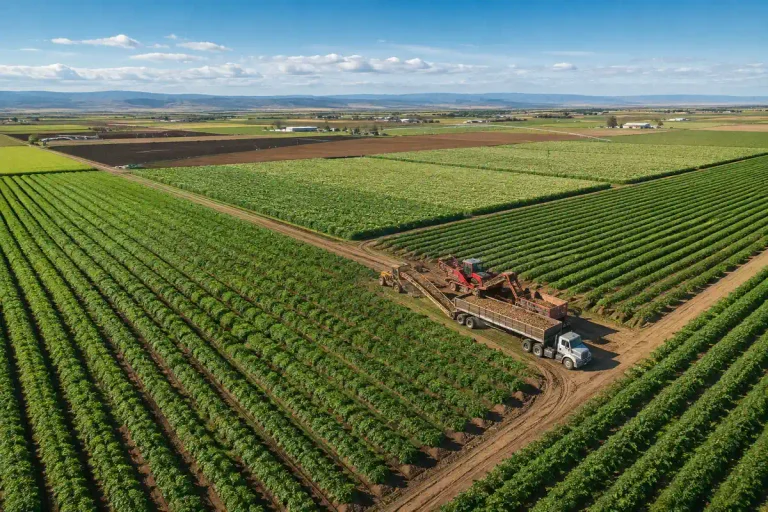
India exports fresh and processed potatoes to many countries, with key markets in Asia, the Middle East and parts of Africa. In 2024–2025, India’s potato exports stayed constant at around 0.5–0.7 million tonnes, led by states like Gujarat and Uttar Pradesh.
Potato export matters for farmers, traders and food processors. It helps manage surplus production and supports better prices during peak harvest seasons. Export demand also depends on quality, storage and global price trends.
This guide explains the full export process, potato varieties, rules, major markets, trade data and practical steps for exporters in 2026.
Potato Production and Export Overview
India is the second-largest potato producer in the world. Annual production is around 58–60 million tonnes, based on recent data from government sources.
Only a small share goes to export. Most is consumed locally. Still, export demand is stable due to nearby markets.
Key Export States
- Gujarat
- Uttar Pradesh
- Punjab
- West Bengal
Gujarat leads exports because of better port access and storage facilities.
Also read: Top 10 Potato Producing States in India by Production
Potato Export Process from India
Exporting potatoes involves multiple steps and requirements may vary based on destination country, product type and shipment conditions.
Step 1: Registration and Licensing
Exporters must register with:
- APEDA (Agricultural and Processed Food Products Export Development Authority)
- DGFT (Import Export Code required)
Step 2: Sourcing and Grading
Potatoes are sourced from farms and sorted based on:
You might also like
-
 Aeroponics vs Traditional Potato Farming: Costs, Yields & Benefits
 -
 India Frozen Potato Products Market Growth 2026: What’s Driving the Boom
 -
 Why the Netherlands Leads the Global Potato Industry
 -
 Top 10 Potato Producing States in India by Production 2026
 -
 Why Food Manufacturers Are Picking Potato Starch
 -
 Idaho Potatoes vs Russet Potatoes – What’s the Real Difference?
- Size
- Shape
- Skin quality
- Damage level
Only export-grade potatoes are selected.
Step 3: Packaging
Common packaging:
- Mesh bags (10–25 kg)
- Jute bags
- Cartons (for premium markets)
Proper ventilation is needed to avoid spoilage.
Step 4: Quality Inspection
Inspection includes:
- Pest check
- Disease check
- Residue levels
A phytosanitary certificate is issued.
Step 5: Cold Storage and Transport
Potatoes are stored at controlled temperature (2–4°C for seed potatoes, 8–12°C for table potatoes).
Transport is done via:
- Refrigerated trucks
- Sea containers
Step 6: Customs Clearance and Shipping
Export documents required:
- Commercial Invoice
- Packing List
- Bill of Lading
- Phytosanitary Certificate
- Certificate of Origin
- IEC copy
- Insurance documents
After clearance, goods are shipped to destination countries.
Also read: India Potato Exports to Indonesia in 2025 – Market Trends & Price Outlook
Potato Varieties for Export
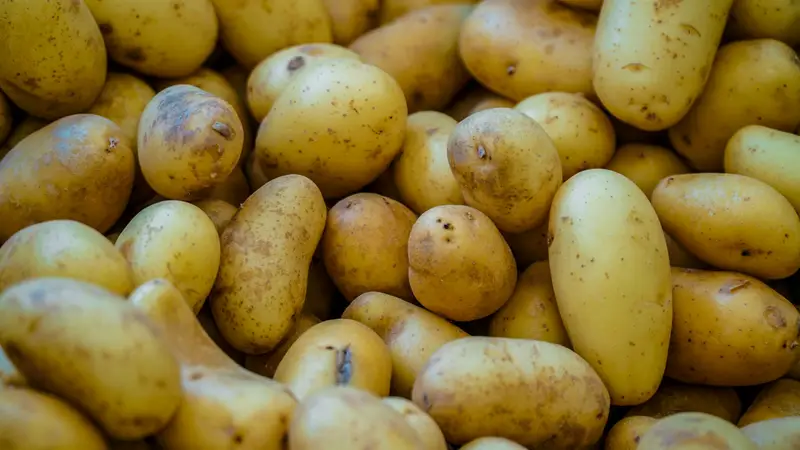
India grows many potato varieties, but only some are suitable for export.
Common Export Varieties
| Variety | Use | Key Feature |
|---|---|---|
| Kufri Jyoti | Table | Medium size, good shelf life |
| Kufri Pukhraj | Table | Early harvest, high yield |
| Kufri Chandramukhi | Table | Smooth skin |
| Kufri Chipsona | Processing | Low sugar, good for chips |
| Kufri Frysona | Processing | Suitable for fries |
Processing varieties are used for chips and frozen products, while table varieties are exported fresh.
Rules and Regulations for Potato Export
Exporters must follow Indian and importing country rules.
Indian Regulations
- Registration with Agricultural and Processed Food Products Export Development Authority (APEDA)
- IEC code from DGFT
- Compliance with FSSAI standards (for processed products)
Registration with APEDA and obtaining an IEC from DGFT are mandatory initial steps, but exporters must also comply with shipment-specific, destination-country and product-level regulations.
International Requirements
Each country sets its own rules:
- Maximum pesticide residue limits
- Pest-free certification
- Packaging standards
Middle East countries often require strict quality grading.
Key Export Markets for Indian Potatoes
India mainly exports to nearby regions due to lower transport cost.
Top Importing Countries
- Nepal
- Bangladesh
- Sri Lanka
- United Arab Emirates
- Oman
- Malaysia
These markets prefer fresh potatoes due to regular consumption.
Also read: Top 10 Potato Producing Countries in the World (2026)
Key Data: India Potato Export (2024–2026)
| Year | Export Volume (Million Tonnes) | Key Markets |
|---|---|---|
| 2024 | 0.55–0.60 | Nepal, Bangladesh |
| 2025 | 0.60–0.65 | UAE, Sri Lanka |
| 2026* | 0.65–0.70 (estimated) | Middle East growth |
*2026 values are based on trade trends and early reports.
Exports are growing slowly, mainly due to regional demand and better logistics.
Who Can Export Potatoes from India?
Individuals, traders, FPOs and companies can export potatoes, provided they meet all regulatory requirements such as IEC registration, banking compliance and export documentation.
Eligible exporters include:
- Farmers and Farmer Producer Organizations (FPOs)
- Traders and commission agents
- Export companies
- Agri startups
There is no restriction on company size. Even small exporters can start with nearby markets like Nepal.
Pricing and Trade Trends
Potato export prices depend on:
- Domestic supply
- Storage cost
- Global demand
Average Export Price (2024–2025)
- Fresh potatoes: $150–$250 per tonne
- Processed potatoes: $400–$800 per tonne
Indicative export prices vary widely based on quality, destination and market conditions. The figures provided are general estimates and not guaranteed trade prices.
Payment Methods for Potato Exports
Each payment method carries different risk levels. Exporters should consult banks or trade experts before choosing terms, especially when dealing with new buyers.
Common Payment Methods
- Advance payment (safe for exporter)
- Letter of Credit (LC)
- Documents against Payment (DP)
- Open account (used with trusted buyers)
New exporters usually prefer advance or LC.
Also read: Best Potato Farming Practices in India: From Planting to Harvest
Challenges in Potato Export
Exporters face some common issues:
Storage Losses
Potatoes spoil if not stored properly. Cold storage is important.
Price Fluctuation
Prices change based on domestic supply.
Quality Standards
Different countries have strict rules. Even small defects can lead to rejection.
Logistics Cost
Shipping cost affects profit, especially for distant markets.
Opportunities for Exporters in 2026
There are clear growth areas for Indian exporters:
Rising Demand in Middle East
Countries like UAE and Oman import regularly.
Processing Industry Growth
Frozen fries and chips demand is rising globally.
Government Support
Schemes from APEDA and agriculture departments help exporters.
Conclusion
India has strong potential in potato exports due to high production and nearby markets. Export growth is consistent, not fast, but reliable. Success depends on quality, storage and choosing the right market.
Exporters who focus on grading, compliance and logistics can build stable trade in 2026 and beyond.
Also read: Why Food Manufacturers Are Picking Potato Starch
Frequently Asked Questions (FAQs)
-
Which country imports the most potatoes from India?
Nepal and Bangladesh are the top importers of Indian potatoes.
-
What is the best potato variety for export?
Kufri Jyoti and Kufri Pukhraj are widely used for export.
-
Do I need a license to export potatoes from India?
Yes, you need an IEC code and APEDA registration.
-
What is the export price of potatoes from India?
Fresh potatoes usually range from $150 to $250 per tonne.
-
Which port is best for potato export in India?
Gujarat ports like Mundra are commonly used due to location advantage.
Image source: Potato Insights and Yen Vu on Unsplash
Sources:
- APEDA Potato Export Dashboard
- Potato Export – facebook
- FAOSTAT Potato Production Data
- India Potatoes, frozen exports by country
Recent Articles

"Get the latest potato industry updates in Google Search. Add Potato Insights as a preferred source for potato markets, processing, trade and industry news."