
Yukon Gold Potatoes: History, Taste, Uses, Nutrition & Growing
Yukon Gold potatoes are known for their yellow flesh, creamy texture and rich flavor. Learn about their history, best cooking uses, nutrition, growing, harvesting and storage.
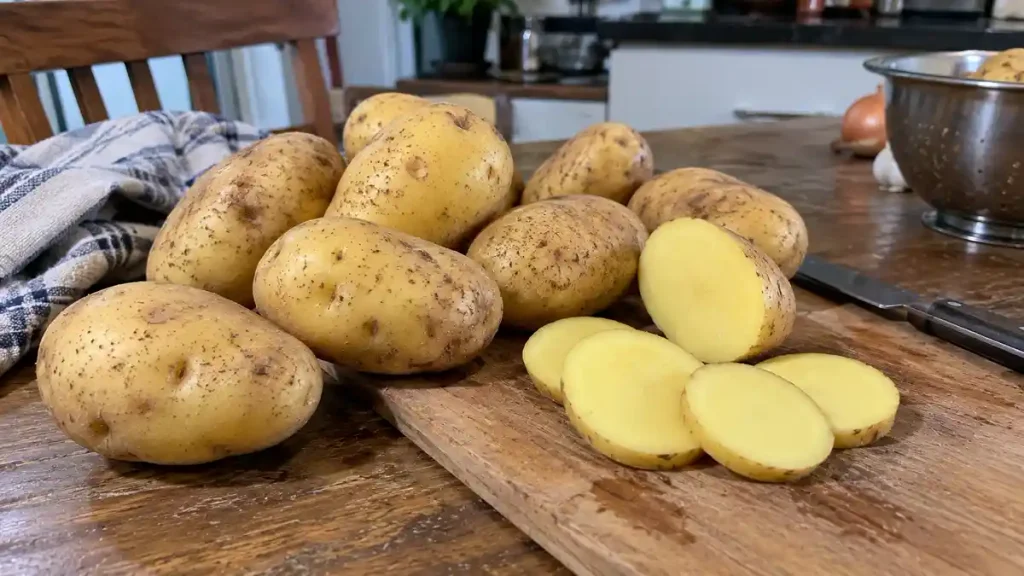
Yukon Gold potatoes are yellow-fleshed, medium-starch potatoes known for their smooth skin, shallow pink eyes, moist texture and rich flavor. They are an all-purpose potato that works well for boiling, baking, mashing, roasting and French fries.
The variety was developed in Canada by potato breeder Gary Johnston at the University of Guelph. The original breeding work dates to 1966 and Yukon Gold was registered in Canada in 1980.
For U.S. home cooks and gardeners, Yukon Gold is useful because the same potato can work in many dishes and can also be grown in a home garden.
What Are Yukon Gold Potatoes?
Yukon Gold is a yellow-fleshed potato variety with thin, smooth yellowish skin and shallow pink eyes. The flesh stays yellow after cooking, which gives dishes a naturally golden appearance.
The variety has a balance of waxy and mealy starch characteristics. That middle texture helps it hold its shape in some dishes while still becoming soft enough for mashed potatoes.
Yukon Gold is also classified as a mid-season variety and is known for good storability.
Yukon Gold Potato History
Yukon Gold was developed at the University of Guelph in Ontario, Canada, by potato breeder Gary Johnston. The cross was made in 1966, using Norgleam and W5279-4.
The name does not mean the potato was developed in Canada’s Yukon territory. Its name refers to its golden color and the Yukon River Gold Rush region.
Yukon Gold reached Canadian growers in the early 1980s and later became widely recognized in Canada and the United States.
Its development was significant because yellow-fleshed potatoes were still less common in North American markets. Yukon Gold helped make named yellow-fleshed potatoes more familiar to consumers.
You might also like
-
 Canada’s Potato Output Dips Slightly in 2025 After Dry Season
 -
 National Potato Fair 2026 Held in Modipuram
 -
 KVK Zunheboto Gives Potato Seeds and Tools to Farmers
 -
 Ukraine Set for 50% Bigger Potato Harvest in 2025
 -
 Ben Sklarczyk Elected 2026 National Potato Council President
 -
 Record Potato Harvest Hurts Belgian Farmers
What Do Yukon Gold Potatoes Taste Like?
Yukon Gold potatoes have a rich, buttery flavor and moist, creamy flesh. Their texture sits between a waxy potato and a dry, starchy potato such as a russet.
That balance makes them useful for several cooking methods.
They work especially well for:
- Mashed potatoes
- Roasted potatoes
- Boiled potatoes
- Potato salad
- Soups and stews
- Gratin
- Home-style French fries
For very fluffy baked potatoes, a russet is usually a better choice. Yukon Gold is more useful when you want a creamy texture and stronger potato flavor.
Yukon Gold vs. Russet Potatoes
| Feature | Yukon Gold | Russet |
|---|---|---|
| Flesh | Yellow | White to cream |
| Texture | Moist and creamy | Dry and starchy |
| Starch level | Medium | High |
| Best uses | Mashing, roasting, boiling, salads | Baking, frying, mashing |
| Skin | Thin and smooth | Thick and rough |
| Shape | Usually round to oval | Usually elongated |
There is no single winner. Yukon Gold is a good choice for dishes where you want the potato to stay moist and flavorful, while russets are better when a dry, fluffy texture is the goal.
Also read: Idaho Potatoes vs Russet Potatoes – What’s the Real Difference?
Yukon Gold Potato Nutrition
Yukon Gold potatoes provide carbohydrates, fiber, potassium, vitamin C and vitamin B6. The exact nutrition depends on the potato’s size and how it is prepared.
Keeping the skin on can help retain fiber and other nutrients. Cooking methods also matter. A plain baked or boiled potato has a very different nutrition profile from potatoes prepared with large amounts of butter, oil, cheese or cream.
For a simple everyday option, serve Yukon Gold potatoes with vegetables and a protein source rather than treating them only as a high-fat side dish. See this potato calories calculator to know more.
How to Grow Yukon Gold Potatoes
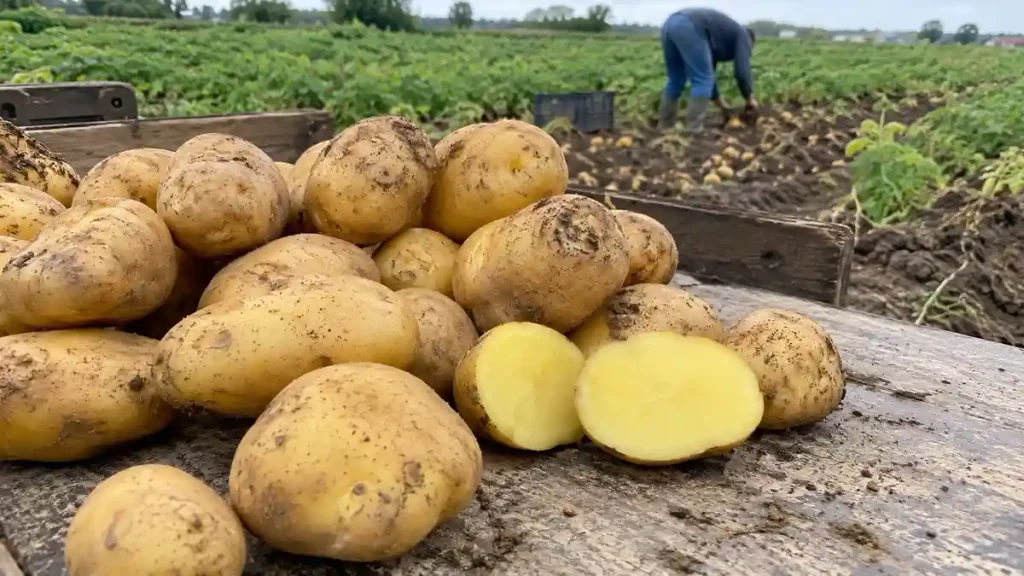
Yukon Gold can be grown in many U.S. home gardens, but planting dates depend on the local climate.
Start with certified, disease-free seed potatoes rather than relying on grocery-store potatoes. Cut larger seed potatoes into pieces with at least one eye, then plant them in sunny, well-drained soil after conditions are suitable for potatoes.
Basic growing steps
- Choose a sunny garden location with well-drained soil.
- Plant certified seed pieces after the soil has warmed.
- Space seed pieces according to the recommendations for your growing system.
- Hill soil around the plants as the stems grow.
- Keep the soil evenly watered without leaving it waterlogged.
- Watch for insects and potato diseases during the growing season.
- Harvest new potatoes earlier or wait until the plants die back for mature tubers.
Potatoes form best when soil temperatures remain relatively cool. University of Illinois Extension notes that maximum tuber formation occurs around 60°F to 70°F.
When Should You Harvest Yukon Gold Potatoes?
You can harvest Yukon Gold potatoes as new potatoes when the tubers reach a useful size. New potatoes have thin skins and are best eaten soon after harvest.
For potatoes intended for storage, wait until the plants have died back and the tubers have developed mature skins. Handle them carefully because cuts and bruises reduce storage life.
After digging, cure mature potatoes in a dark, well-ventilated place before moving them into long-term storage.
Also read: Top 10 Highest Potato Producing States in the US
How to Store Yukon Gold Potatoes
Store Yukon Gold potatoes in a dark, cool place with good air circulation. Avoid light because it can cause potatoes to turn green.
For home storage, extension guidance commonly recommends curing potatoes before long-term storage, followed by cool storage. University of Utah Extension recommends curing at about 55°F to 60°F for 2 to 3 weeks and then storing potatoes at about 40°F to 45°F.
Do not wash potatoes before long-term storage unless necessary. Remove damaged or rotting potatoes because they can shorten the storage life of the rest.
Avoid storing potatoes beside apples or pears because ethylene from these fruits can encourage sprouting.
Yukon Gold Potato Quick Facts
- Origin: University of Guelph, Ontario, Canada
- Breeder: Gary Johnston
- Original breeding: 1966
- Canadian registration: 1980
- Flesh color: Yellow
- Skin: Yellowish with shallow pink eyes
- Maturity: Mid-season
- Texture: Moist and creamy with medium starch characteristics
- Main uses: Boiling, baking, mashing, roasting and French frying
- Home storage: Dark, cool and well-ventilated conditions
Are Yukon Gold Potatoes Good for You?
Yukon Gold potatoes can be part of a healthy diet. They provide carbohydrates and several nutrients, including potassium, vitamin C, vitamin B6 and fiber.
The overall nutrition of a potato dish depends heavily on preparation. Boiled or baked potatoes are different from potatoes prepared with large amounts of added fat and salt.
Conclusion
Yukon Gold potatoes remain a practical choice for U.S. kitchens because they offer a useful middle ground between waxy and starchy potatoes. Their yellow flesh, creamy texture and rich flavor work across many common recipes.
For gardeners, certified seed, suitable soil temperatures, steady watering and careful harvesting are the main points to focus on. For storage, cure mature potatoes first and keep them dark, cool and well ventilated.
If you want one potato variety that can handle mashed potatoes, roasting, boiling, salads and many everyday meals, Yukon Gold is a strong all-purpose option.
Also read: Top 10 Potato Producing Countries in the World
FAQs
-
Are Yukon Gold potatoes good for mashed potatoes?
Yes. Their moist, creamy texture makes them well suited to mashed potatoes.
-
Are Yukon Gold potatoes good for baking?
Yes, but they produce a denser and creamier result than russet potatoes.
-
Can you eat Yukon Gold potato skin?
Yes. The thin skin is commonly eaten after the potato is cleaned properly.
-
How long do Yukon Gold potatoes take to grow?
Timing varies by climate and growing conditions. New potatoes can be harvested earlier, while mature potatoes are harvested after the plants die back.
-
Should Yukon Gold potatoes be refrigerated?
For typical home storage, a cool, dark, well-ventilated storage area is preferred. Refrigeration can cause unwanted changes in potato starch and cooking quality.
Image credit: Potato Insights
Sources & References:
- Yukon Gold Potato Celebrates 50th Anniversary — University of Guelph
- Yukon Gold — Canadian Food Inspection Agency
- Growing potatoes in home gardens — University of Minnesota Extension
- How to Grow Potatoes in Your Garden — Utah State University Extension
- Potatoes — University of Illinois Extension
- Harvest and Handling — Utah State University Extension
Recent Articles



"Get the latest potato industry updates in Google Search. Add Potato Insights as a preferred source for potato markets, processing, trade and industry news."