Europe Faces Potato Shortage: Which Countries Can Fill the Supply Gap?
Europe faces a potato shortage after 2026 heatwaves. See which countries can supply potatoes, including Egypt, the UK, Israel and potential US sources.
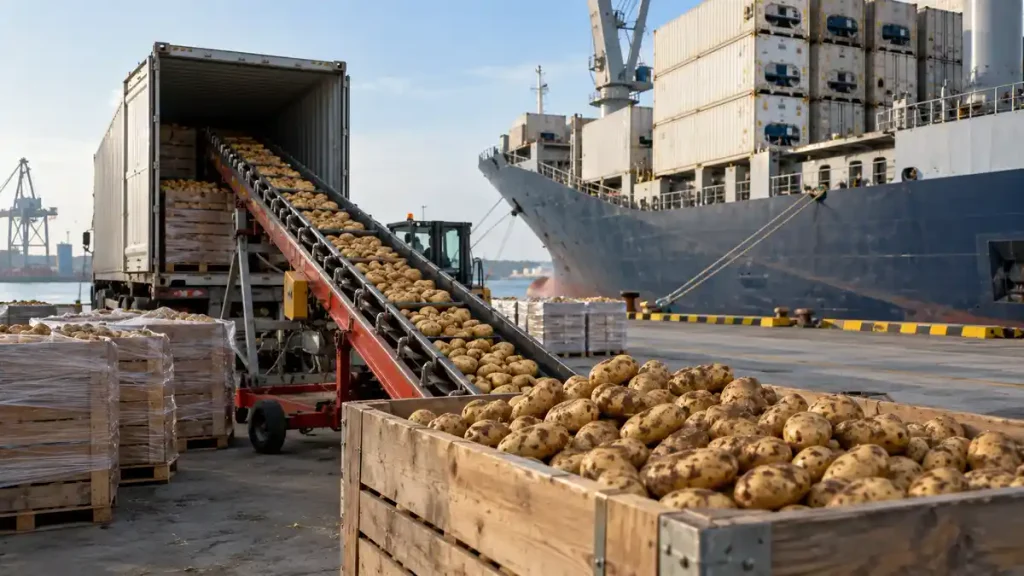
Europe is heading into a tighter potato supply season after heatwaves and drought damaged crops across major producing countries. Germany, France, Belgium and the Netherlands are among the hardest-hit markets, with the 2026 crop expected to fall well below recent levels.
For potato buyers, processors and importers, this raises an important question. If European production is lower, which countries can supply potatoes to Europe?
Egypt is already the largest extra-EU supplier of fresh potatoes, followed by the United Kingdom and Israel. Morocco, Switzerland and Türkiye are smaller suppliers that could also have opportunities, while the United States has production capacity but faces practical challenges in supplying fresh potatoes to Europe.
Why is Europe facing a potato shortage?
Heat and drought have affected potato crops across northwestern Europe during the 2026 growing season. The problem has been made worse by a smaller planted area after the unusually large 2025 harvest pushed potato prices down.
The North-Western European Potato Growers (NEPG) estimates that the 2026 consumption potato crop in Belgium, Germany, France and the Netherlands could reach only 20.695 million tonnes. That would be 25.4% below the 27.750 million tonnes recorded in 2025 and 13.7% below the five-year average.
The Energy & Climate Intelligence Unit estimates that drought and heatwaves could reduce production in these four countries by around 3.1 million tonnes compared with the five-year average. Including Great Britain, the estimated weather-related loss rises above 3.5 million tonnes.
The shortage is not only about total volume. Smaller tubers and lower yields can also create problems for processors that need potatoes meeting specific size and quality requirements.
Which countries can supply potatoes to Europe?
Europe already imports fresh potatoes from several countries outside the EU. Trade data for January 2022 through March 2026 shows a concentrated supply base, with Egypt, the United Kingdom and Israel accounting for most extra-EU fresh potato imports.
Also read: Top Potato Exporting Countries Ranked by Value
| Potential supplier | Current position in EU trade | Why it matters |
|---|---|---|
| Egypt | Largest extra-EU supplier | Strong position in seasonal supply |
| United Kingdom | Major supplier | Close geographic market and established trade |
| Israel | Major supplier | Established supplier during suitable seasonal windows |
| Morocco | Smaller supplier | Growing EU potato trade |
| Switzerland | Smaller supplier | Existing access to European markets |
| Türkiye | Smaller but growing supplier | Trade has increased from a low base |
| United States | Potential alternative | Large potato industry, but fresh exports face distance and EU plant-health requirements |
1. Egypt
Egypt is the clearest existing source for additional European potato imports.
You might also like
-
 UK Potato Growers Set for Packed Conference in Dundee
 -
 Ben Sklarczyk Elected 2026 National Potato Council President
 -
 Potato Prices Rise as Afghan Families Struggle
 -
 From Judo Mat to Farmland: Harvinder Singh Becomes India’s Top Potato Seed Farmer
 -
 Chemical Withdrawals Hit UK Potato Growers
 -
 Canada’s Potato Output Dips Slightly in 2025 After Dry Season
From January 2022 to March 2026, Egypt accounted for about 48.9% of EU extra-EU imports of fresh or chilled potatoes by value, according to Eurostat COMEXT-based trade data. The United Kingdom accounted for 25.9% and Israel for 21%.
Egypt also has an important seasonal advantage. Its potato production can supply European markets during periods when European domestic stocks are lower.
For European importers looking for established suppliers, Egypt is therefore an important market to watch.
2. United Kingdom
The UK is already one of the largest suppliers of fresh potatoes to the EU.
The same Eurostat-based data shows the UK as the second-largest extra-EU source by value between January 2022 and March 2026.
Its geographic proximity gives UK suppliers a logistical advantage compared with suppliers located farther away. However, potatoes moving from Great Britain into the EU are treated as imports from a non-EU country and must meet EU plant-health requirements.
3. Israel
Israel is another established supplier, accounting for about 21% of EU extra-EU fresh potato imports by value over the January 2022 to March 2026 period.
Its role is particularly relevant because European buyers already have established trade relationships with Israeli suppliers. That can make existing supply channels more useful when European production falls.
4. Morocco
Morocco is a much smaller supplier than Egypt, the UK and Israel, but its potato trade with the EU has grown.
EU fresh potato import data shows Moroccan imports increasing substantially between 2015 and 2025, although the absolute value remained far below the three largest suppliers.
Morocco could therefore provide additional supply without being viewed as a replacement for the major suppliers.
Also read: Europe Faces Potato Shortage After Summer Heatwaves Hit Crops
5. Switzerland and Türkiye
Switzerland and Türkiye are smaller sources in the EU fresh potato import market.
Trade data shows both countries have increased their exports to the EU over the longer term. Türkiye’s increase is particularly large in percentage terms, although it started from a very small base.
These markets may matter more as supplementary suppliers than as sources capable of replacing the output lost in northwestern Europe.
Could the United States supply potatoes to Europe?
The United States has a large potato industry and is an important global potato producer and exporter. However, supplying fresh potatoes to the European market is different from simply having enough potatoes available.
EU rules require certain plants and plant products entering from non-EU countries to meet plant-health requirements and, where applicable, carry phytosanitary certificates. Imported consignments can also face documentary, identity and plant-health checks.
That means US exporters would need to check the specific EU requirements for the product, origin and destination before planning shipments.
For fresh potatoes, transport distance is another factor. A US supplier may have a potential market in Europe, but shipping economics, product shelf life, buyer specifications and plant-health requirements all need to work together.
The opportunity may be different for processed potato products, where transport and product specifications can differ from those for fresh table potatoes.
What does the shortage mean for European potato buyers?
European buyers may need to look beyond their normal domestic and regional supply channels.
The immediate opportunity is likely to be strongest for suppliers that already have access to EU markets, established logistics and suitable seasonal production.
For importers, important checks include:
- Potato variety and end use
- Tuber size and quality
- Harvest and availability period
- Phytosanitary requirements
- EU import and customs requirements
- Transport cost and delivery time
- Storage and shelf-life requirements
- Requirements for fresh consumption or processing
A cheaper potato at origin may not be the lowest-cost option after freight, handling, certification and border costs are included.
Europe potato shortage 2026 at a glance
| Indicator | Current information |
|---|---|
| Main affected producers | Germany, France, Belgium and the Netherlands |
| Estimated 2026 EU-04 crop | 20.695 million tonnes |
| Change from 2025 | -25.4% |
| Change from five-year average | -13.7% |
| Estimated weather-related loss in EU-04 | About 3.1 million tonnes |
| Leading extra-EU supplier | Egypt |
| Other major suppliers | United Kingdom and Israel |
NEPG describes its 2026 crop figure as a first estimate, so final production numbers can change as harvesting progresses.
Also read: Potato Export from India: A Complete Guide
What happens next for the European potato market?
The European market may rely more heavily on imports if domestic supplies remain tight through the season. Existing suppliers such as Egypt, the UK and Israel are well placed within the current trade network, while smaller suppliers may find additional opportunities.
For US potato exporters, the European shortage is worth watching, but market access should be assessed product by product rather than assuming that a production shortfall automatically creates an export opportunity.
The key question for buyers and exporters is not simply who has potatoes. It is who can supply the right potato, at the right time, with the required quality and documentation.
FAQs
-
Why is Europe facing a potato shortage in 2026?
Heatwaves, drought and a smaller planted area have reduced expected potato production across major northwestern European producing countries.
-
Which country supplies the most potatoes to the EU?
Egypt is currently the largest extra-EU supplier of fresh or chilled potatoes by value.
-
Can Egypt export more potatoes to Europe?
Egypt already has an established position in the European import market and is an important seasonal supplier.
-
Can the United States export fresh potatoes to Europe?
Potentially, but US exporters must meet EU plant-health and import requirements, while freight distance and commercial costs also affect competitiveness.
-
Will European potato prices rise?
Lower production can put upward pressure on prices, but the final market effect will depend on imports, remaining stocks, demand and the final harvest.
Image credit: Potato Insights
Online sources & references:
- Heatwave triggers potato shortage in Europe — Financial Times
- Chips are down: summer drought knocks over 3 million tonnes off UK and Europe’s potato crop — Energy & Climate Intelligence Unit
- NEPG Forecasts 25% Drop in EU-04 Potato Crop After Heat and Drought — Potato Business
- Potatoes, fresh or chilled, EU Trade — The Trade Hub, based on Eurostat COMEXT
- Market evolution: Fresh potatoes (CN 070190), 2015–2025 — EU Trade Explorer
- Trade in plants & plant products from non-EU countries — European Commission
- Inspection of imported plants and plant products — European Commission
Recent Articles

Follow us to receive updates🔔