Europe Faces Potato Shortage After Summer Heatwaves Hit Crops
Europe faces a potato shortage in 2026 after heatwaves and drought cut yields, reduced tuber size and pushed potato prices higher across major producers.
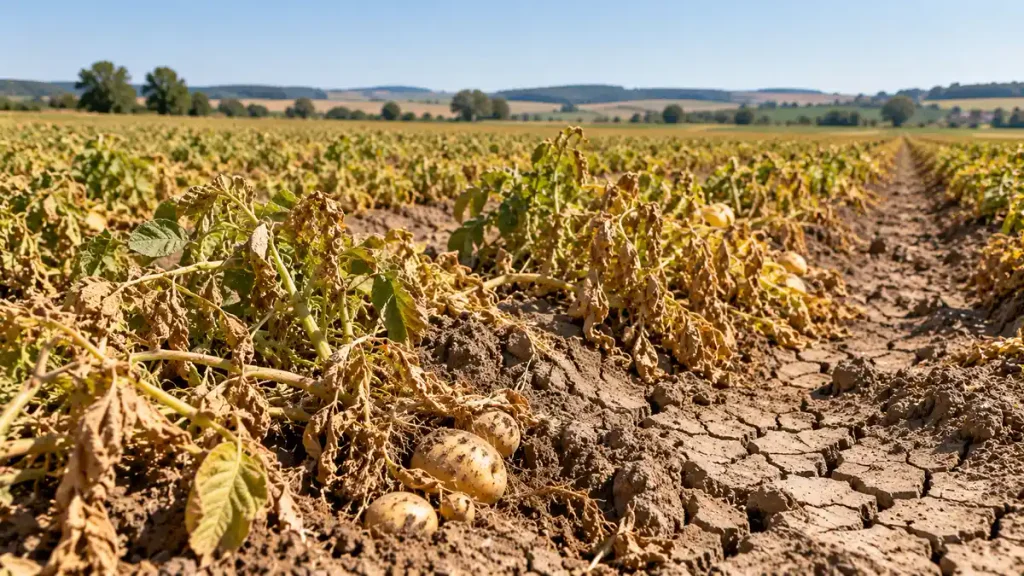
Europe is heading into a much tighter potato season after repeated heatwaves and drought damaged crops across major producing countries. New analysis estimates that extreme weather could cut potato production in Germany, France, Belgium and the Netherlands by about 3.1 million tonnes compared with the five-year average.
The weather-related losses come after growers had already planted fewer potatoes in 2026 following a record harvest and very low prices in 2025.
The combination of smaller planted area, lower yields and smaller tubers is now putting pressure on supplies for fresh potatoes, processors and frozen fries.
How much potato production has been lost?
The Energy and Climate Intelligence Unit (ECIU), using industry data, estimates that drought and heatwaves will reduce the 2026 potato harvest in Germany, France, Belgium and the Netherlands by around 3.1 million tonnes. When Great Britain is included, the estimated weather-related loss rises to more than 3.5 million tonnes.
The ECIU estimates the lost production across the five countries is worth between €498 million and €818 million at current prices. For Germany, France, Belgium and the Netherlands alone, the estimated value is between €405 million and €622 million.
The impact varies by country. Current industry estimates put yields around 21% below the five-year average in Belgium, 13% lower in France, 10% lower in Germany and 7% lower in the Netherlands.
Also read: European Heatwave Raises Concerns for Potato Farmers
2026 European potato crop at a glance
| Indicator | 2026 estimate |
|---|---|
| Weather-related loss, Germany, France, Belgium and Netherlands | 3.1 million tonnes |
| Weather-related loss including Great Britain | More than 3.5 million tonnes |
| Belgium yield vs five-year average | -21% |
| France yield vs five-year average | -13% |
| Germany yield vs five-year average | -10% |
| Netherlands yield vs five-year average | -7% |
These figures are estimates, not final harvest results. Some potatoes were still in the ground when the estimates were published, so final production could change.
Why did heatwaves damage the potato crop?
Potatoes need a constant supply of water during tuber development. Repeated periods of extreme heat combined with limited rainfall reduced soil moisture across parts of western and central Europe.
The European Commission’s Joint Research Centre reported in July that repeated heatwaves and limited rainfall had already depleted soil moisture across large areas of western and central Europe. The agency said heat and water stress were particularly affecting summer crops where irrigation was limited or soil moisture had already fallen.
You might also like
-
 Ukraine Set for 50% Bigger Potato Harvest in 2025
 -
 Chemical Withdrawals Hit UK Potato Growers
 -
 CRISPR Potato Tests Move Ahead in Sweden and Denmark
 -
 Bangladesh Govt to Send Tk260cr Help to Potato Farmers
 -
 Potato Farming Falls in Bogura, Bangladesh as Losses Grow
 -
 From Judo Mat to Farmland: Harvinder Singh Becomes India’s Top Potato Seed Farmer
For potatoes, the problem is not only the total amount harvested. Heat and drought can also limit tuber growth, leaving potatoes smaller than the sizes required by processors.
That is becoming a major issue for the European processing industry.
France, Belgium and other major producers are under pressure
France has already reported a major expected decline. Reuters reported in August that France’s main potato crop was expected to fall 23% or about 2 million tonnes, from 2025. The average yield for food potatoes was forecast at 37.4 tonnes per hectare, down 14% from 2025.
Belgium is facing a serious size problem. According to the ECIU, the Fontane variety, an important processing potato, was producing around 32 tonnes per hectare at the end of August, about 30% below the previous year. Only around half of the crop was above the 50 mm size preferred by processors.
This matters for frozen fries manufacturers because large, properly shaped potatoes are generally needed to produce the long fries demanded by the foodservice and retail markets.
The shortage started before the heatwaves
Weather is only part of the story.
Europe entered 2026 after a very large potato harvest in 2025. The resulting oversupply pushed prices down sharply, encouraging growers to reduce the area planted for the new season.
The ECIU estimates that the smaller planted area in Germany, France, Belgium and the Netherlands represents another 3.6 million tonnes of potential production compared with what would have been produced if the five-year average yield had been achieved.
NEPG data also shows that the planted area for consumption potatoes in its four member countries fell 13.7% in 2026 to about 521,500 hectares, down 82,700 hectares from 2025. NEPG said heat and drought were then adding further pressure on yields and tuber size.
So the current supply problem has two parts. Farmers planted less after last year’s surplus and the crop that was planted has been damaged by this year’s weather.
Potato prices are already responding
The tighter supply is beginning to show in the European potato market.
The ECIU reported that Belgian free-market potato prices had risen from around zero in April to €200 or more per tonne. German processing potatoes had reached about €240 per tonne, compared with a season low of €15 in June. British processors were paying more than £300 per tonne, compared with £180 in February.
For food manufacturers, higher raw potato costs can put pressure on processing margins. Retailers and foodservice companies may also face higher costs if supply remains tight.
But the final effect on consumers will depend on how the harvest develops, available stocks, imports and demand from processors.
Also read: How Climate Change Is Affecting U.S. Potato Production
What does this mean for frozen fries?
Frozen fries could be one of the areas most affected because processors need potatoes with specific size and quality characteristics.
The problem is therefore not simply having fewer tonnes of potatoes. A crop can have enough total weight but still provide fewer potatoes suitable for processing into standard fries.
Belgium is especially important because it is a major exporter of frozen fries. Smaller potatoes could reduce the supply of suitable raw material for processors and increase competition for potatoes that meet processing specifications.
The Irish Farmers’ Association also reported in September that the North-West European potato harvest was expected to be around 19.5 million to 20.5 million tonnes, compared with 27.3 million tonnes the previous year. It said exporters were already looking for supplies for Mediterranean markets while growers were holding back some supplies.
What happens next?
The 2026 European potato market will depend heavily on final harvest results and how much of the crop reaches the required size and quality.
Some recent rainfall may allow potatoes that remain in the ground to gain additional weight, but the ECIU said that for many growers the recovery may come too late.
For processors and food manufacturers, the situation means supply planning will become more important through the rest of the season. Buyers may need to pay closer attention to regional availability, potato sizes, contract volumes and alternative sourcing options.
For consumers, the most visible effects could be smaller potatoes, changes in fry sizes and higher prices if the supply squeeze continues.
The key point is that Europe’s 2026 potato shortage is the result of both reduced planting and extreme weather. The final scale of the shortage will become clearer as the harvest is completed.
Also read: Why the Netherlands Leads the Global Potato Industry
FAQs
-
Why is Europe facing a potato shortage in 2026?
Europe planted fewer potatoes after the large 2025 harvest, while heatwaves and drought then reduced yields and tuber size in 2026.
-
How much potato production could Europe lose?
The ECIU estimates about 3.1 million tonnes of weather-related losses in Germany, France, Belgium and the Netherlands, rising above 3.5 million tonnes when Great Britain is included.
-
Which European countries are most affected?
Belgium, France, Germany and the Netherlands are among the major affected producers, with current yield estimates below their five-year averages.
-
Will French fries become more expensive?
Higher potato costs are already being reported in European processing markets. Whether this leads to higher consumer prices will depend on supply, stocks, processing costs and demand.
-
Will Europe run out of potatoes?
Current reports point to a significant supply squeeze rather than all potatoes becoming unavailable. Final harvest results and remaining stocks will determine how severe the shortage becomes.
Image credit: Potato Insights
Online sources & references:
- Impact of the 2026 summer drought and heatwaves on the European potato harvest — Energy and Climate Intelligence Unit
- French potato crop to shrink by 23% after severe weather, growers say — Reuters report
- Heatwaves impact summer and winter crops — Joint Research Centre, European Commission
JRC crop assessment - Potato Market Report 9th September — Irish Farmers’ Association
- North-West Europe potato harvest forecast — Nieuwe Oogst
Recent Articles
Follow us to receive updates🔔