AI Potato Sorting Machines and the Future of Potato Processing
Can AI help potato processors recover more usable potatoes and cut manual sorting? Discover how optical sensors, machine learning and automated grading improve potato processing.
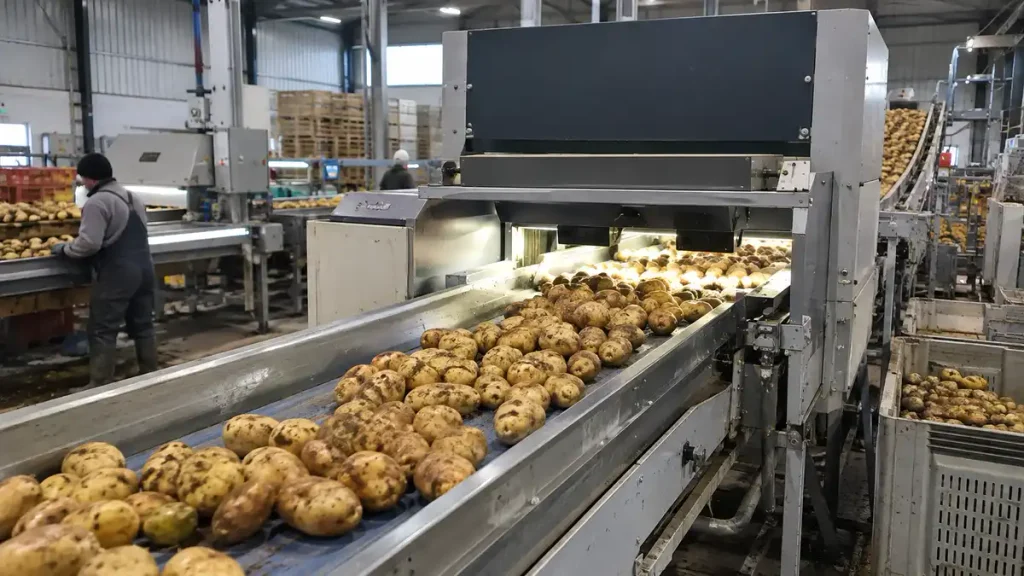
AI-powered potato sorting systems use cameras, optical sensors and machine learning to identify defects, remove unwanted materials and grade potatoes by quality, size, shape and colour. For potato growers, packers and processors, these systems can reduce manual sorting work, improve product consistency and help recover more usable potatoes from each batch.
The technology is gaining attention across the United States and Europe, where potato businesses supply fresh markets, frozen French fries, potato chips and other processed products.
As sorting requirements become more specific, automated inspection can help businesses manage differences in potato quality without relying entirely on manual checks.
How AI Potato Sorting Machines Work
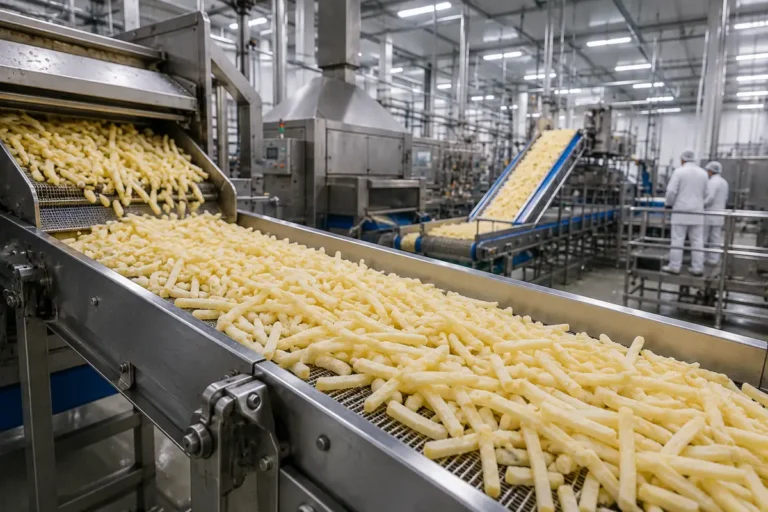
AI potato sorting machines inspect potatoes as they move along a conveyor or grading line. Cameras and sensors collect information about each potato, while software classifies it according to settings chosen by the operator.
The process usually follows four steps.
- Image capture. Cameras record the potato’s surface, colour, size and shape. Some systems use near-infrared sensors or other inspection methods to detect features that ordinary cameras may miss.
- Defect detection. Machine learning models identify patterns linked to damage, green skin, cracks, deformities or other unwanted features.
- Quality classification. The system assigns potatoes to categories based on the requirements of a fresh market, chip producer or French fry processor.
- Automatic separation. Mechanical ejectors, belts or other handling systems direct potatoes into the correct outlet.
The result depends on the sensors, software, training data and type of defect being inspected. A surface-inspection system should not automatically be assumed to detect every internal defect.
Also read: Best Potato Varieties for Crinkle Cut French Fries in the USA
Five Ways AI Sorting Is Changing Potato Processing
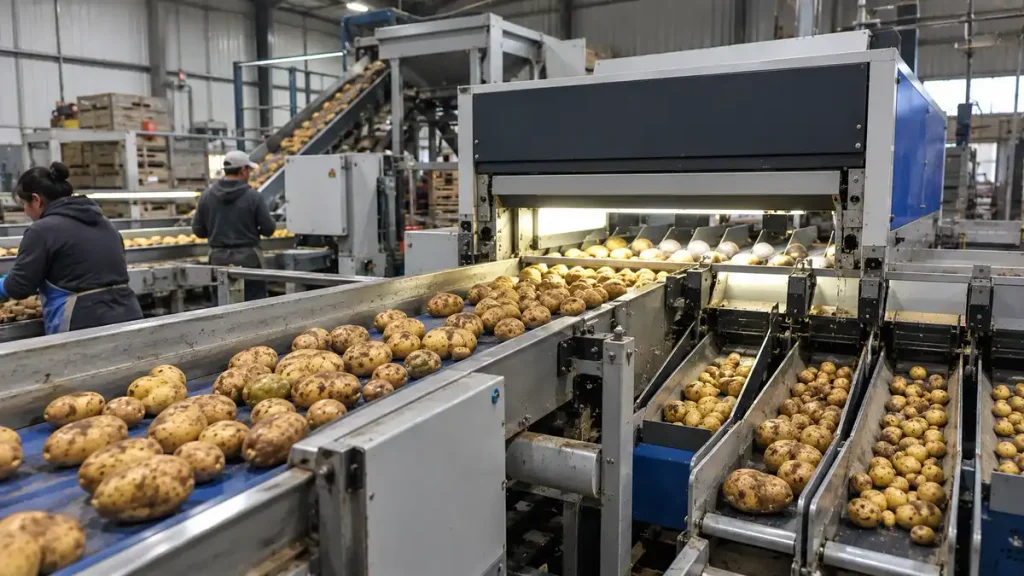
1. More consistent potato quality
Manual inspection depends on workers identifying defects while handling large volumes of produce. AI sorting applies defined grading rules throughout a production run.
This helps fresh potato packers supply more consistent sizes and quality grades. For processors, it can help separate potatoes that meet the requirements for French fries, crisps and other products.
2. Less manual pre-sorting
Removing stones, soil clods, rotten potatoes and other unwanted material is an important task during potato intake.
You might also like
-
 Top Potato Chips Manufacturers in the USA
 -
 Potato Peelings Could Replace Coal: Scientists Develop Eco-Friendly Biofuel
 -
 Japan’s Potato Chips Market Set to Reach $7B by 2035
 -
 KFC Asks Fans to Decide Future of Potato Wedges
 -
 US Firm Simplot Finalises Deal to Buy Belgian Frozen Fries Maker Clarebout
 -
 How Are Kettle Cooked Potato Chips Made? Factory Process Explained
Ellips CleanFlow Pre-Sorter, an AI-powered system designed to remove unwanted materials before potatoes reach storage or grading equipment. The manufacturer states that it can handle up to 120 tonnes per hour and reduce manual pre-sorting labour by up to 80%. These are product-specific claims, not results that should be assumed for every sorting installation.
For growers and storage operators, early removal of unwanted material can also reduce the risk of equipment damage and prevent poor-quality produce from taking up valuable storage space.
3. Better recovery of usable potatoes
A potato with a minor surface defect may still be suitable for processing, depending on the buyer’s requirements. Rejecting every imperfect potato can result in avoidable product loss.
AI sorting systems can apply different grading rules to different products. A fresh-market customer may reject a potato that a peeling or processing operation can still use.
This gives processors more control over how they divide incoming potatoes into saleable grades, although actual yield improvements depend on the crop, defect levels, machine settings and product specifications.
4. Faster inspection of high-volume production
Large packing and processing facilities need to inspect substantial quantities of potatoes within limited operating periods.
The Newtec Celox-P-UHD is one example of an optical sorting system designed for potato grading. According to its product information, the machine uses cameras to assess size, shape and surface quality, with the grading criteria set by the operator.
Automated inspection can reduce dependence on repeated manual checks. However, the full production line must also have enough conveyor, washing, cutting and packing capacity to handle the sorter’s output.
5. Better detection of specific defects
Some newer systems use machine learning to recognise patterns that are difficult to classify using simple size or colour measurements alone.
For example, Eqraft and BIOMETiC described their Eqrader potato grading project in March 2025. The proposed system was designed to inspect external characteristics and internal quality, including features such as cracks, sprouts, deformities and hollow spaces. The report described development plans, so these capabilities should not be treated as independently verified performance results.
The wider industry trend is toward more detailed inspection, with the aim of matching each potato to the most suitable grade or use.
What Does AI Potato Sorting Mean for the USA and Europe?
The United States and Europe are important markets to watch because their potato supply chains include fresh packing, storage, frozen French fries and snack production.
United States
US potato growers and processors can use automated sorting at harvest intake, during storage handling and in processing facilities. The TOMRA 3A, for example, is designed to remove foreign material from harvested potatoes, while the company’s customer story about Sackett Ranch describes its use of TOMRA sorting equipment for potatoes supplied to a chip-processing plant.
The practical value depends on the operation’s harvest volume, labour needs, quality standards and cost of rejected potatoes.
Europe
European potato businesses are also developing and adopting optical grading systems. In the Netherlands, Eqraft has worked with Italian technology company BIOMETiC on potato inspection technology, while Dutch company Ellips supplies AI-based sorting solutions for potatoes and onions.
These developments show the range of technology being developed in Europe, from early removal of unwanted materials to detailed grading for fresh and processed potatoes.
Similar applications may interest potato businesses in Canada, India and other producing regions. The right system, however, depends on local crop conditions, available technical support, processing needs and investment costs.
Also read: Best Frozen French Fries Manufacturers in the USA
AI Sorting vs Traditional Potato Sorting
| Factor | Traditional mechanical or manual sorting | AI-powered optical sorting |
|---|---|---|
| Size grading | Screens, rollers and graders | Cameras and software, often alongside mechanical grading |
| Defect detection | Visual checks and selected mechanical methods | Camera and sensor inspection with trained models |
| Sorting rules | Fixed mechanical settings or human judgement | Software-defined quality criteria, depending on the system |
| Labour needs | Manual checks and removal tasks may be substantial | Can reduce repetitive inspection and sorting work |
| Investment | Depends on equipment and line design | Requires investment in sensors, software, handling equipment and support |
AI sorting does not replace every conventional machine. Many production lines combine mechanical grading, optical inspection and manual quality checks to achieve the required result.
What Should Potato Businesses Check Before Investing?
Buying an AI potato sorter requires more than comparing machine speed or advertised accuracy. Operators should assess the full cost and expected benefit.
- Defect detection: Ask which defects the machine can identify, including whether it checks internal quality or only the surface.
- Product suitability: Check performance on the potato varieties, sizes and conditions handled by your operation.
- Throughput: Compare the rated capacity with actual line requirements, including seasonal peaks.
- False rejection: Find out how often good potatoes are incorrectly rejected and how the machine handles borderline defects.
- Integration: Check compatibility with existing conveyors, graders, storage systems and processing equipment.
- Operating costs: Include energy, maintenance, software support, training, spare parts and downtime.
- Real-world trials: Test representative batches and measure saleable output, rejected product, labour requirements and operating costs.
A practical investment assessment should compare the additional value recovered and costs saved against the total cost of ownership. Vendor claims alone are not enough to establish a payback period.
What Is Next for AI-Powered Potato Sorting?
The next stage of development is likely to focus on more detailed defect recognition, improved internal inspection and grading rules that can be adjusted to suit different buyers.
For potato businesses, the main opportunity is to make better use of incoming crops while maintaining consistent quality. But the value of AI depends on accurate detection, suitable machine settings, reliable equipment and the economics of each production line.
Growers, packers and processors considering this technology should begin by identifying their biggest sorting problem, then compare systems using actual crop samples and measurable operating results.
Conclusion
AI-powered potato sorting is helping the global potato industry improve grading, detect defects, reduce repetitive manual work and manage product quality more consistently. In the USA and Europe, these systems offer practical options for fresh potato packers, storage operators and processors producing French fries and potato chips.
However, the right investment depends on the type of potatoes handled, the accuracy of defect detection, processing volume and operating costs. Potato businesses should compare equipment using real crop samples and measure how much usable product they recover before choosing a system.
As sorting technology develops, the greatest value will come from using AI to make better grading decisions, reduce avoidable waste and meet buyers’ quality requirements.
Also read: Why the Netherlands Leads the Global Potato Industry
FAQs
-
What is an AI potato sorting machine?
It is a machine that uses cameras, sensors and artificial intelligence to classify potatoes by characteristics such as colour, shape, size and defects, then separates them according to set requirements.
-
Can AI detect internal potato defects?
Some systems are designed to inspect internal quality using specialised scanning methods. Standard optical systems may focus mainly on external features, so buyers should verify the detection capabilities of each machine.
-
Does AI potato sorting reduce labour costs?
It can reduce the need for repetitive manual sorting and inspection. The actual savings depend on the machine, existing labour requirements, throughput and operating conditions.
-
Is AI sorting suitable for small potato packing businesses?
It may be suitable, but the investment must match the business’s volume and quality needs. Smaller operations should compare automated equipment with simpler grading systems and consider maintenance and service costs.
-
Which factors matter most when choosing an AI potato sorter?
Defect detection accuracy, false rejection rates, throughput, product handling, integration, operating costs and local technical support are among the most important factors.
Image (AI generated) Credit: Potato Insights
Sources & references:
- A Guide to AI at TOMRA Food, TOMRA
- TOMRA 3A Optical Food Sorting Machine, TOMRA
- TOMRA 5B Advanced Sorting Solutions, TOMRA
- Eqraft Redefines Potato Classification with Eqrader Optical Sorting Machine, PotatoPro
- Ellips CleanFlow Pre-Sorter, Ellips
- Newtec Optical Sorting Celox-P-UHD, Newtec
Recent Articles

"Get the latest potato industry updates in Google Search. Add Potato Insights as a preferred source for potato markets, processing, trade and industry news."