Idaho Potato Industry 2026: Production, Varieties & Market Outlook
Idaho remains the leading U.S. potato-producing state. See how 2026 acreage, production, varieties, processing demand and water conditions are shaping the Idaho potato industry.
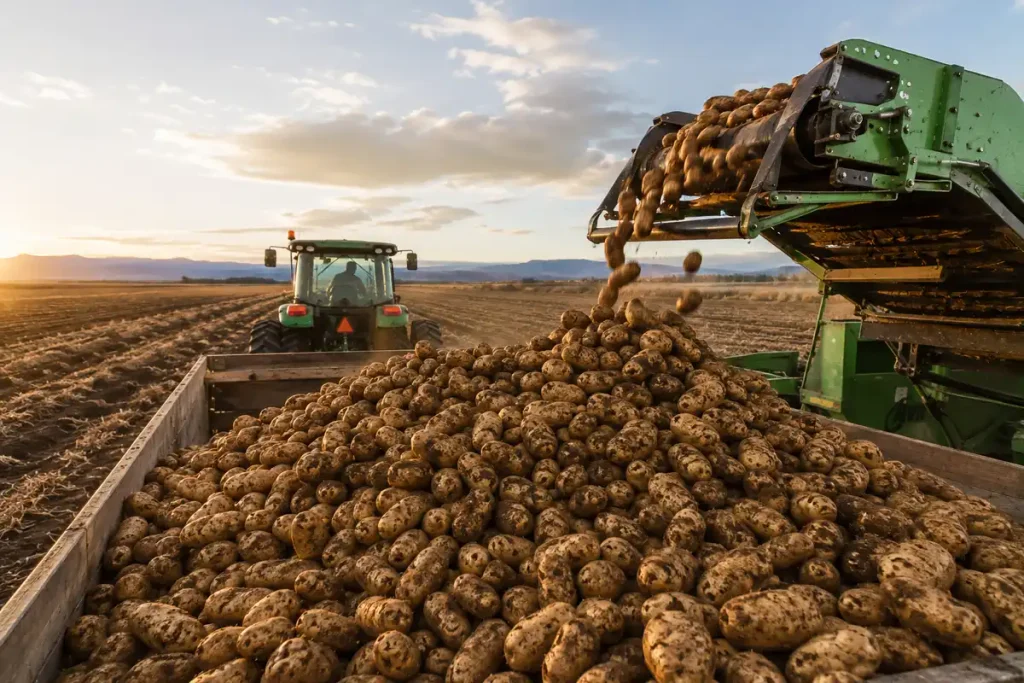
Idaho remains the leading potato-producing state in the United States. USDA data shows that Idaho planted 300,000 acres of potatoes in 2026, with 299,500 acres listed as harvested area so far in the latest state overview. Production and value figures for 2026 are not yet available in that dataset.
The state’s potato industry covers much more than farm production. Idaho potatoes supply fresh-market buyers, foodservice operators and processors making frozen fries, tater tots, chips, dehydrated potatoes and other products.
For growers, processors, buyers and food companies, 2026 is an important year because Idaho has reduced planted acreage while remaining a major source of potatoes for the U.S. market.
Idaho Potato Production in 2026
Idaho’s 2026 potato acreage is lower than the previous two years. The latest USDA figures show 300,000 planted acres and 299,500 harvested acres. The USDA has not yet reported final 2026 production, yield, price or value figures in its Idaho state overview.
For comparison, Idaho planted 315,000 acres in both 2024 and 2025. In 2025, the state harvested 314,500 acres and produced 138.38 million cwt of potatoes, with a reported value of about $1.08 billion.
That means 2026 planted acreage is about 4.8% below the 2025 level. The reduction matters because Idaho accounts for about one-third of U.S. potato production, so changes in its acreage can affect the broader U.S. potato supply.
Also read: Idaho Potatoes vs Russet Potatoes – What’s the Real Difference?
Where Are Idaho Potatoes Grown?
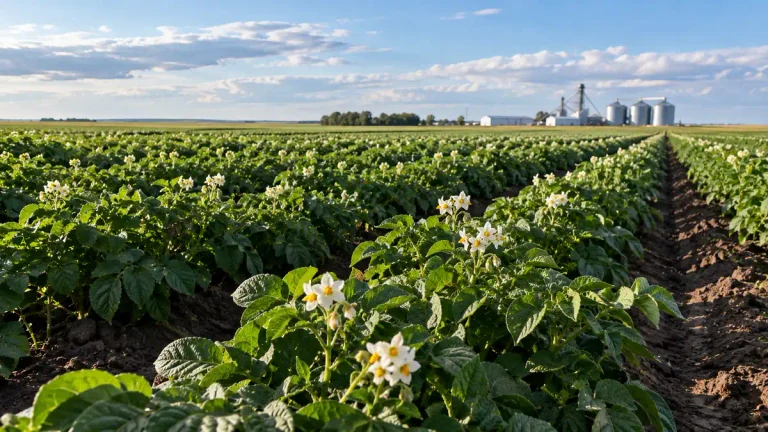
Most commercial potato production takes place along the Snake River Plain. The production area stretches across much of southern Idaho and commercial production covers roughly 350 miles.
Irrigation is a major part of this system. Water from the Snake River and Snake River Aquifer allows growers to manage crop water needs in an area where natural rainfall alone would not support the same level of production.
What Potato Varieties Are Grown in Idaho?
Russet potatoes dominate Idaho production, but the state grows many other varieties for different markets.
You might also like
-
 Dhanuka Agritech Warns Potato Farmers About Early and Late Blight
 -
 Ben Sklarczyk Elected 2026 National Potato Council President
 -
 Bangladesh Govt to Send Tk260cr Help to Potato Farmers
 -
 National Potato Fair 2026 Held in Modipuram
 -
 Aeroponics Changes How Potatoes are Grown in Haryana, India
 -
 Odisha Dy CM Gives Seed Potatoes to Athagarh Farmers
Russet Burbank
Russet Burbank is one of the best-known Idaho varieties. It is a late-maturing potato with high solids and is used for fresh potatoes as well as frozen and dehydrated products. Its high solids help produce a dry, fluffy baked potato and a crisp, golden fry.
Russet Norkotah
Russet Norkotah is an important fresh-market variety. It has a uniform shape and is widely used in retail and foodservice. Compared with Russet Burbank, it generally produces a softer and more moist cooked texture.
Ranger Russet
Ranger Russet is especially relevant to potato processors. It has high solids and low sugars, which support good fry color and texture. The variety is grown mainly for frozen processing.
Other Idaho varieties
Idaho growers also produce Clearwater Russet, Umatilla Russet, Western Russet, Alturas Russet, reds, yellows, fingerlings and other specialty varieties. The Idaho Potato Commission lists dozens of varieties grown in the state.
For commercial buyers, the variety matters because potatoes intended for fresh retail have different requirements from potatoes intended for French fries, chips or dehydration.
Also read: Top 10 Highest Potato Producing States in the US
How Idaho Potatoes Are Processed
Processing gives Idaho’s potato industry a major market beyond fresh sales.
Processors take raw potatoes and turn them into products such as French fries, tater tots, chips and dehydrated mashed potatoes. The Idaho Potato Commission currently lists nine licensed fresh Idaho potato processors.
The basic processing chain usually includes:
- Receiving and inspecting raw potatoes
- Cleaning and washing
- Sorting and grading
- Peeling when required
- Cutting or preparing the potatoes for the final product
- Cooking, blanching, frying, drying or other processing
- Freezing or packaging
- Storage and distribution
Processing varieties are selected for traits such as size, solids, sugar levels, shape and fry color. This is why a variety that works well for fresh retail may not be the first choice for a large French fry operation.
Idaho’s processing sector serves several product categories, including frozen potatoes, dehydrated potatoes, chips and other value-added products. The state also has a large network of shippers and processors serving domestic and export markets.
Idaho Potato Industry Market Outlook for 2026
The 2026 outlook starts with a smaller planted area. USDA’s Economic Research Service reported that U.S. potato planted acreage was expected to fall in 2026, with much of the reduction concentrated in Idaho. The agency linked the broader reduction to lower fresh grower prices and stagnant demand for contracted processing-potato acreage.
USDA’s July 2026 market outlook also reported that Idaho accounts for about half of the national reduction in potato acreage. This makes Idaho one of the main states to watch when assessing the U.S. potato supply for the 2026 season.
For the industry, several factors will matter through the rest of 2026:
- Acreage: Lower planted area can reduce the supply available to fresh and processing markets if yields do not offset the decline.
- Processing demand: Contracted processing remains an important part of Idaho’s potato economy.
- Water availability: Irrigation remains essential to production across the Snake River Plain.
- Variety selection: Processors need varieties that meet specific requirements for fries, chips, dehydration and other products.
- Fresh-market demand: Retail and foodservice demand will influence grower returns and planting decisions.
The final size and value of the 2026 Idaho potato crop will become clearer as USDA releases additional production and price data.
Also read: Top 10 Potato Producing Countries in the World
Idaho Potato Industry at a Glance
| Indicator | Latest figure |
|---|---|
| 2026 planted acreage | 300,000 acres |
| 2026 harvested acreage | 299,500 acres |
| 2025 planted acreage | 315,000 acres |
| 2025 harvested acreage | 314,500 acres |
| 2025 production | 138.38 million cwt |
| 2025 potato value | $1.08 billion |
| Idaho share of U.S. production | About 32% |
| Licensed fresh Idaho potato processors | 9 |
Sources: USDA NASS, USDA ERS, University of Idaho and Idaho Potato Commission.
What the 2026 Idaho Potato Market Means for Buyers
The smaller 2026 acreage does not automatically mean a shortage. Final production will also depend on yield, crop conditions, quality, storage and how potatoes are divided between fresh and processing markets.
For food manufacturers and commercial buyers, the main point is to watch both acreage and crop performance. A smaller planted area can tighten supply, but strong yields can partly offset the reduction.
For processors, variety and quality will remain just as important as total volume. High-solids russet varieties continue to have an important role in frozen French fries and other processed products.
Conclusion
Idaho continues to sit at the center of the U.S. potato industry, with a large production base, established irrigation system, diverse varieties and a strong processing sector.
The 2026 season starts with 300,000 planted acres, down from 315,000 acres in 2025. The next major indicator will be the state’s final production and yield data. For growers, processors and buyers, Idaho’s crop size, water conditions, processing demand and variety performance will be the main factors to watch through the 2026 marketing year.
Also read: Potato Consumption Per Capita by Country
FAQs:
-
How many potatoes does Idaho produce?
Idaho produced 138.38 million cwt of potatoes in 2025. USDA has not yet reported final 2026 production.
-
Is Idaho the largest potato-producing state?
Yes. University of Idaho identifies Idaho as the top potato-producing state in the U.S., contributing about 32% of national production.
-
What is the most common Idaho potato variety?
Russet Burbank is one of the state’s best-known commercial varieties and is widely used for fresh, frozen and dehydrated products.
-
What Idaho potatoes are used for French fries?
High-solids russet varieties such as Russet Burbank and Ranger Russet are used for French fries and other processing applications.
-
Why is irrigation important for Idaho potatoes?
Most commercial production occurs along the Snake River Plain, where irrigation water allows growers to manage crop water needs in a dry agricultural region.
Image credit: Potato Insights
Sources & Resources:
- 2026 State Agriculture Overview, Idaho — USDA National Agricultural Statistics Service
- 2025 State Agriculture Overview, Idaho — USDA National Agricultural Statistics Service
- Vegetables and Pulses Outlook — USDA Economic Research Service
- Vegetables and Pulses Outlook, April 2026 — USDA Economic Research Service
- Idaho Potatoes, BUL-1114 — University of Idaho Extension
- Idaho Potato Varieties — Idaho Potato Commission
- Processors — Idaho Potato Commission
- Shippers and Processors Directory — Idaho Potato Commission
Recent Articles

"Get the latest potato industry updates in Google Search. Add Potato Insights as a preferred source for potato markets, processing, trade and industry news."