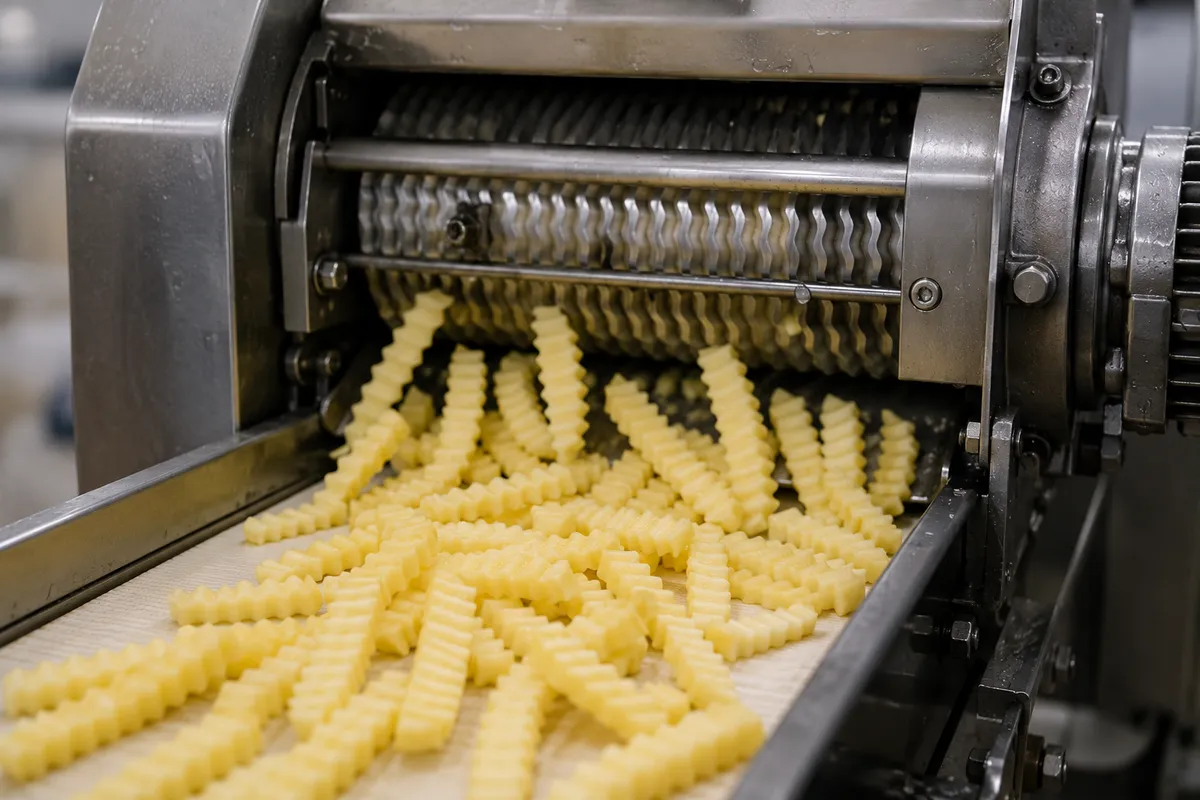
Best Potato Varieties for Crinkle Cut French Fries in the USA
Which potatoes make the best crinkle cut French fries? Russet Burbank is a classic, but Ranger, Umatilla, Clearwater, Highland, Rainier and Dune Russet also have strong processing traits. Here's how they compare.
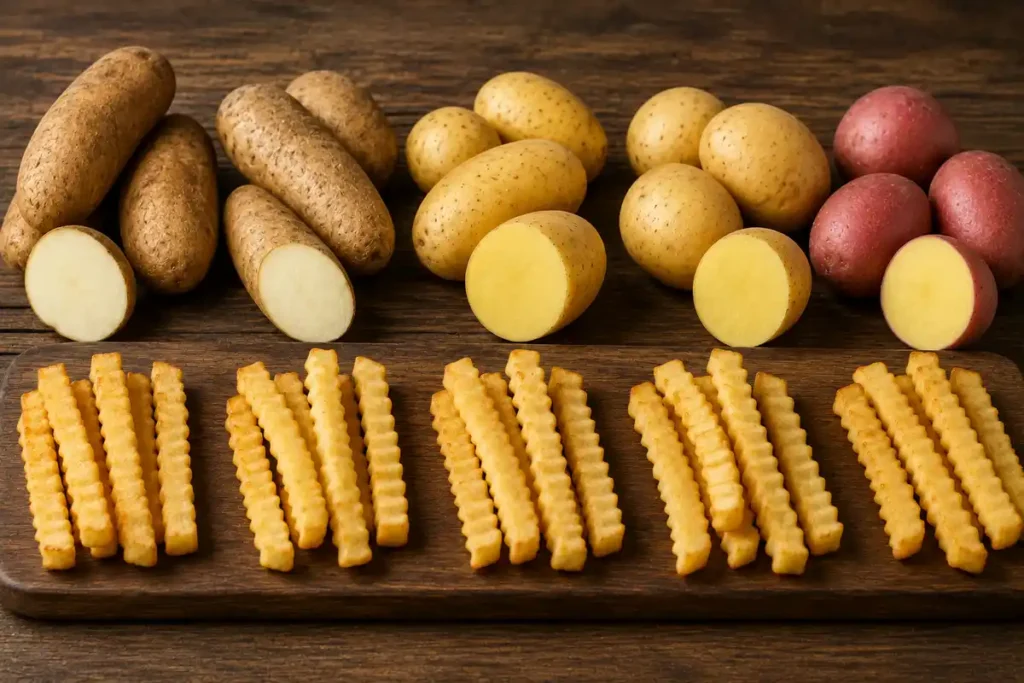
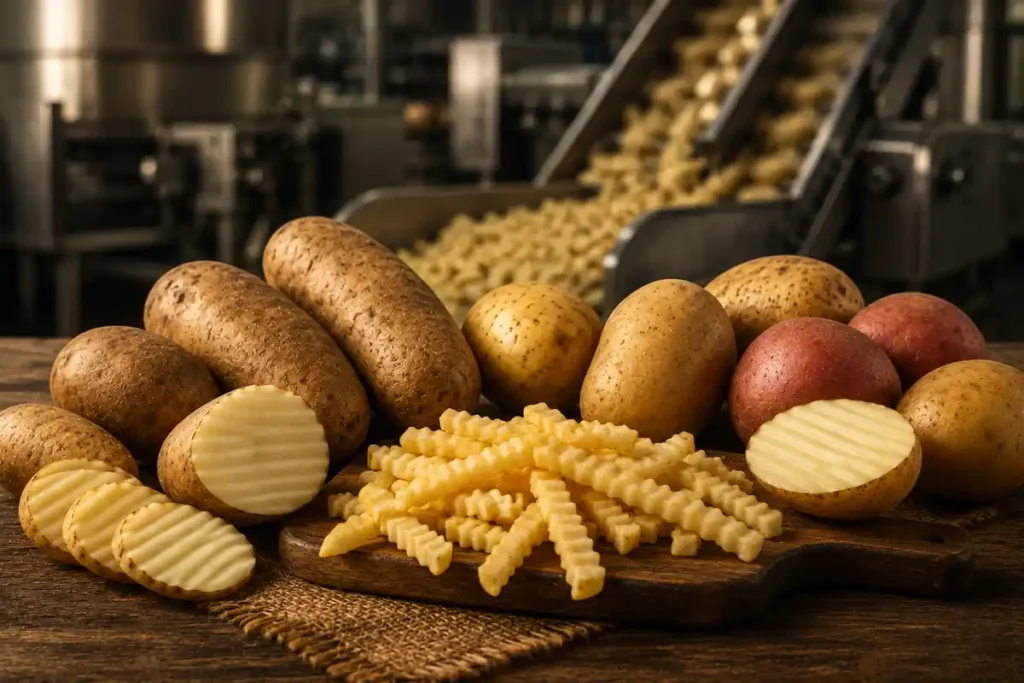
The best potato varieties for crinkle cut French fries are generally long, high-solids processing potatoes, especially Russet varieties. Russet Burbank, Ranger Russet, Umatilla Russet, Clearwater Russet, Highland Russet and newer processing varieties such as Rainier Russet and Dune Russet can produce strong French fry results when crop and storage conditions are well managed.
Crinkle cutting does not require a completely different type of potato from straight-cut fries. The same processing qualities matter, including tuber shape, dry matter, fry color, texture and reducing sugar levels.
The cutting blade creates the ridges, while the potato variety helps determine how the finished fry cooks and tastes.
What Makes a Potato Good for Crinkle Cut Fries?
A good processing potato needs to produce a fry with the right balance of crispness, color, texture and yield.
Long tuber shape
Long, relatively uniform potatoes are useful because they produce longer and more consistent fry strips. This matters even more for commercial crinkle fries, where processors need uniform pieces after cutting.
High dry matter
Dry matter is the part of the potato left after most of its water is removed. Potatoes with suitable dry matter can produce fries with a crisp exterior and a fluffy interior.
Specific gravity is often used by the potato industry as an indicator related to dry matter and processing quality.
Low reducing sugars
Potatoes with too much reducing sugar can develop an overly dark color during frying. Storage conditions also matter because cold storage can cause potatoes to accumulate sugars, a process known as cold-induced sweetening.
Good storage performance
Frozen French fry production often depends on potatoes being stored before processing. A variety that maintains acceptable fry color and quality after storage can be valuable to processors.
Also read: How Are Crinkle Cut French Fries Made? Factory Process Explained
You might also like
-
 Best Frozen French Fries Manufacturers in the USA
 -
 Potato Peelings Could Replace Coal: Scientists Develop Eco-Friendly Biofuel
 -
 Study Shows Global Potato Processing Industry Faces Tech and Eco Test
 -
 Global Potato Crisp Market to Reach USD 45 Billion by 2035
 -
 Fresh vs Processed Potatoes: Which Is More Profitable?
 -
 Washington Potato Industry Production, Processing and Exports
Best Potato Varieties for Crinkle Cut French Fries
1. Russet Burbank
Russet Burbank remains one of the most important French fry potatoes in the United States. It has the long shape and processing characteristics that have made it a long-standing industry standard.
Its major advantage is familiar fry quality. USDA research notes that Russet Burbank continues to be widely grown because it produces the appearance, texture and taste expected from finished fries and performs well after long-term storage.
For crinkle cut fries, its shape and established processing performance make it a strong choice.
2. Ranger Russet
Ranger Russet is another major processing variety used for French fries. It was developed for the potato industry and has strong processing characteristics.
It is valued for fry quality and field performance, although its storage and harvest characteristics differ from Russet Burbank. USDA research specifically compares Ranger Russet with Russet Burbank across yield, disease response, storage and processing traits.
For processors looking for a dedicated French fry variety, Ranger Russet is one of the key varieties to consider.
3. Umatilla Russet
Umatilla Russet was developed with frozen French fry production in mind. USDA research found its fry color and specific gravity consistently equal to or better than Russet Burbank in regional trials.
It also produced more usable tubers than Russet Burbank in the trials cited by USDA. That combination makes Umatilla Russet an important processing option for French fries.
4. Clearwater Russet
Clearwater Russet is particularly interesting for processors concerned about storage and fry color.
USDA describes Clearwater Russet as suitable for processing into French fries and other frozen potato products. It has good resistance to cold-induced sweetening and can maintain acceptable fry color after extended storage under specified conditions.
That makes it useful for processing programs where potatoes need to maintain quality between harvest and production.
Also read: USA vs Canada Frozen French Fry Industry
5. Highland Russet
Highland Russet is another U.S. processing variety with strong French fry characteristics. USDA research describes it as suitable for French fries and other frozen potato products, with fry color and processing ratings similar to Ranger Russet.
Its high yield and processing performance also make it relevant for commercial potato production.
6. Rainier Russet
Rainier Russet is a newer variety compared with Russet Burbank and was commercially released in 2020.
USDA research reports large oblong to long tubers, high specific gravity, excellent fry color and strong processing scores. Its post-harvest processing merit was higher than Russet Burbank and Ranger Russet in the Western Regional Potato Variety Trials.
For processors evaluating newer varieties, Rainier Russet is worth watching.
7. Dune Russet
Dune Russet is one of the newer French fry varieties developed in the United States. USDA describes it as a processing potato developed specifically for French fry use.
Research published in 2026 found that Dune Russet produced high-quality fries with light color and good consumer acceptance. It also showed good processing performance under high-temperature growing conditions and after long-term cold storage.
That makes Dune Russet particularly interesting for growers and processors dealing with warmer production regions.
Also read: Best Frozen French Fries Manufacturers in the USA
Which Potato Is Best for Commercial Crinkle Cut Fries?
There isn’t one variety that is automatically best for every processor.
| Potato variety | Main strength for fry processing | Crinkle fry potential |
|---|---|---|
| Russet Burbank | Established fry quality and storage performance | Excellent |
| Ranger Russet | Strong processing performance | Excellent |
| Umatilla Russet | Fry color and usable tuber production | Excellent |
| Clearwater Russet | Storage performance and fry color | Excellent |
| Highland Russet | Yield and processing quality | Excellent |
| Rainier Russet | Fry quality and high processing merit | Excellent |
| Dune Russet | Fry quality and performance under heat stress | Excellent |
The right choice depends on the processor’s growing region, harvest timing, storage program, yield goals and required fry characteristics.
Does the Potato Variety Change the Crinkle Shape?
The potato variety does not create the crinkle pattern. The corrugated cutting blade creates the ridges.
However, variety still matters because tuber length, width, firmness, internal defects, dry matter and sugar levels can affect how well the potato performs during cutting and frying. A long, uniform processing potato can produce more consistent fry pieces than a short or irregular tuber.
Are Russet Potatoes Always the Best Choice?
Russets are the main group to consider for classic commercial French fries, but that doesn’t mean every Russet variety performs the same way.
Russet Burbank has a long history and strong market acceptance. Newer varieties can offer advantages in yield, disease response, storage, fry color or growing conditions. USDA variety research shows why processors continue to evaluate alternatives rather than relying on one cultivar alone.
For a commercial crinkle fry program, variety selection should therefore be based on the complete production system rather than the name of the potato alone.
Also read: Top Potato Chips Manufacturers in the USA
What Should Processors Look for?
When selecting potatoes for crinkle cut French fries, processors should evaluate:
- Long and uniform tuber shape
- Suitable dry matter and specific gravity
- Good fry color
- Low or well-controlled reducing sugars
- Low levels of internal and external defects
- Suitable storage performance
- Reliable yield
- Performance under the local growing conditions
The best variety on paper may not be the best choice for every farm or processing plant. Storage temperature, crop maturity, growing conditions and processing settings can also affect final fry quality.
Final Takeaway
For U.S. crinkle cut French fries, Russet Burbank remains a strong benchmark, but it isn’t the only option. Ranger Russet, Umatilla Russet, Clearwater Russet, Highland Russet, Rainier Russet and Dune Russet all have characteristics that can make them suitable for commercial French fry processing.
The best choice depends on more than fry shape. Potato variety, growing conditions, harvest maturity, storage and processing controls all work together to determine the quality of the finished crinkle cut fry.
Also read: Top 10 Highest Potato Producing States in the US
FAQs
-
What is the best potato variety for crinkle cut fries?
Russet Burbank is a leading choice, while Ranger Russet, Umatilla Russet, Clearwater Russet, Highland Russet, Rainier Russet and Dune Russet are also important processing options.
-
Are Russet Burbank potatoes good for crinkle fries?
Yes. Russet Burbank has long been used for French fry production because of its fry quality, long shape and ability to perform after storage.
-
What potato characteristics are important for crinkle fries?
Long shape, suitable dry matter, good fry color, controlled reducing sugars, storage performance and low defects are important for commercial processing.
-
Is Dune Russet good for French fries?
Yes. USDA research describes Dune Russet as a French fry processing variety with excellent fry quality and good performance under high-temperature growing conditions.
-
Does crinkle cutting require a special potato?
No. Crinkle fries can be made from many of the same processing varieties used for other French fries. The ridged shape comes from the corrugated cutting equipment.
Image credit: Potato Insights
Sources:
- Do You Use Real Potatoes for Your Fries? — McDonald’s USA
- Highland Russet — USDA Agricultural Research Service
- Clearwater Russet — USDA Agricultural Research Service
- Dune Russet — USDA Agricultural Research Service
- Rainier Russet — USDA Agricultural Research Service
- Payette Russet — USDA Agricultural Research Service
- Umatilla Russet — USDA Agricultural Research Service
- Dune Russet: A French-Fry Potato Cultivar with High Specific Gravity Under High-Temperature Growing Conditions — American Journal of Potato Research
Recent Articles
"Get the latest potato industry updates in Google Search. Add Potato Insights as a preferred source for potato markets, processing, trade and industry news."